Degradation in N-Type Modules: Myth vs Measured Reality
N-Type solar modules promise lower degradation and higher lifetime output. But do field results support these claims? The answer is mostly yes. Yet the full story goes beyond marketing numbers.
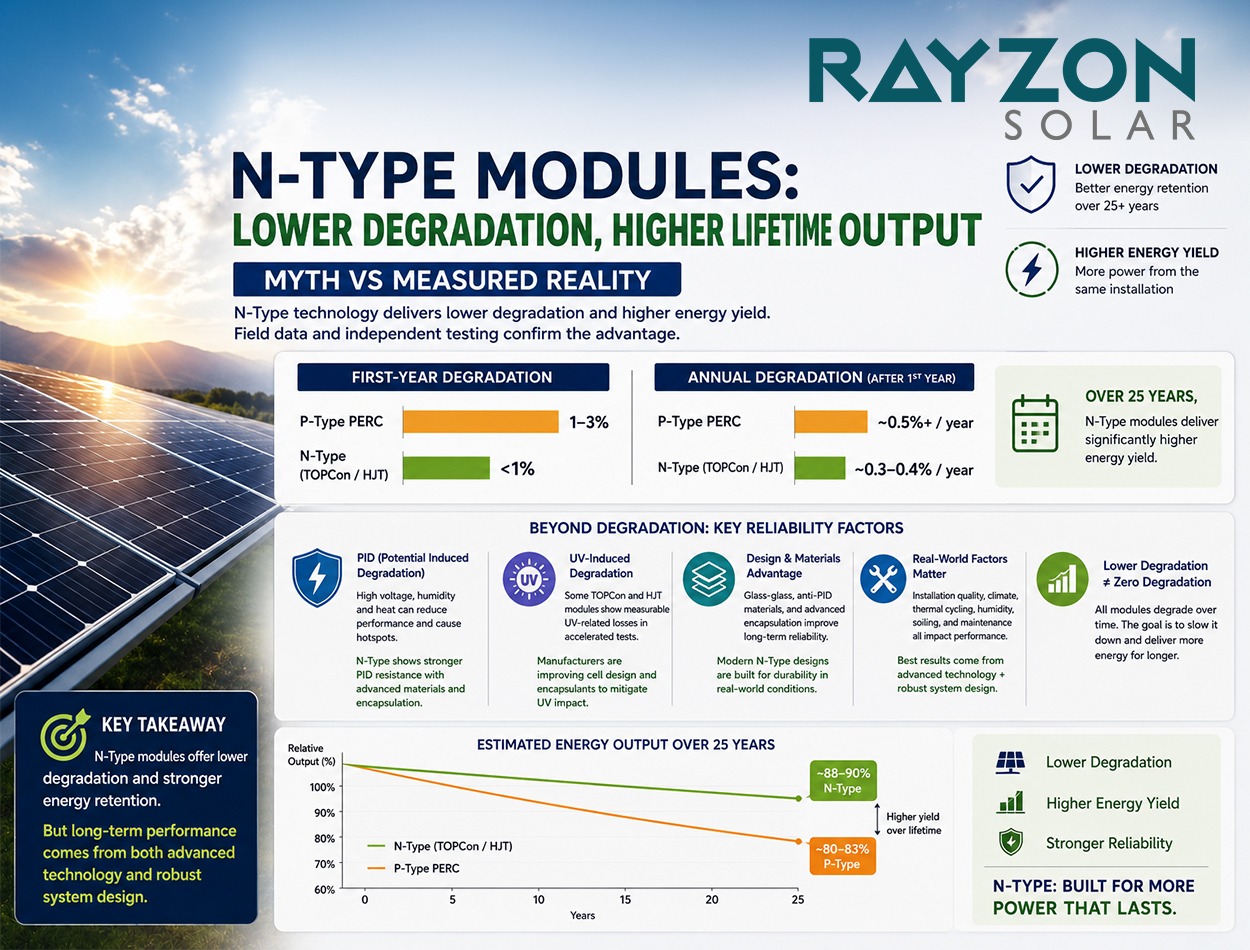
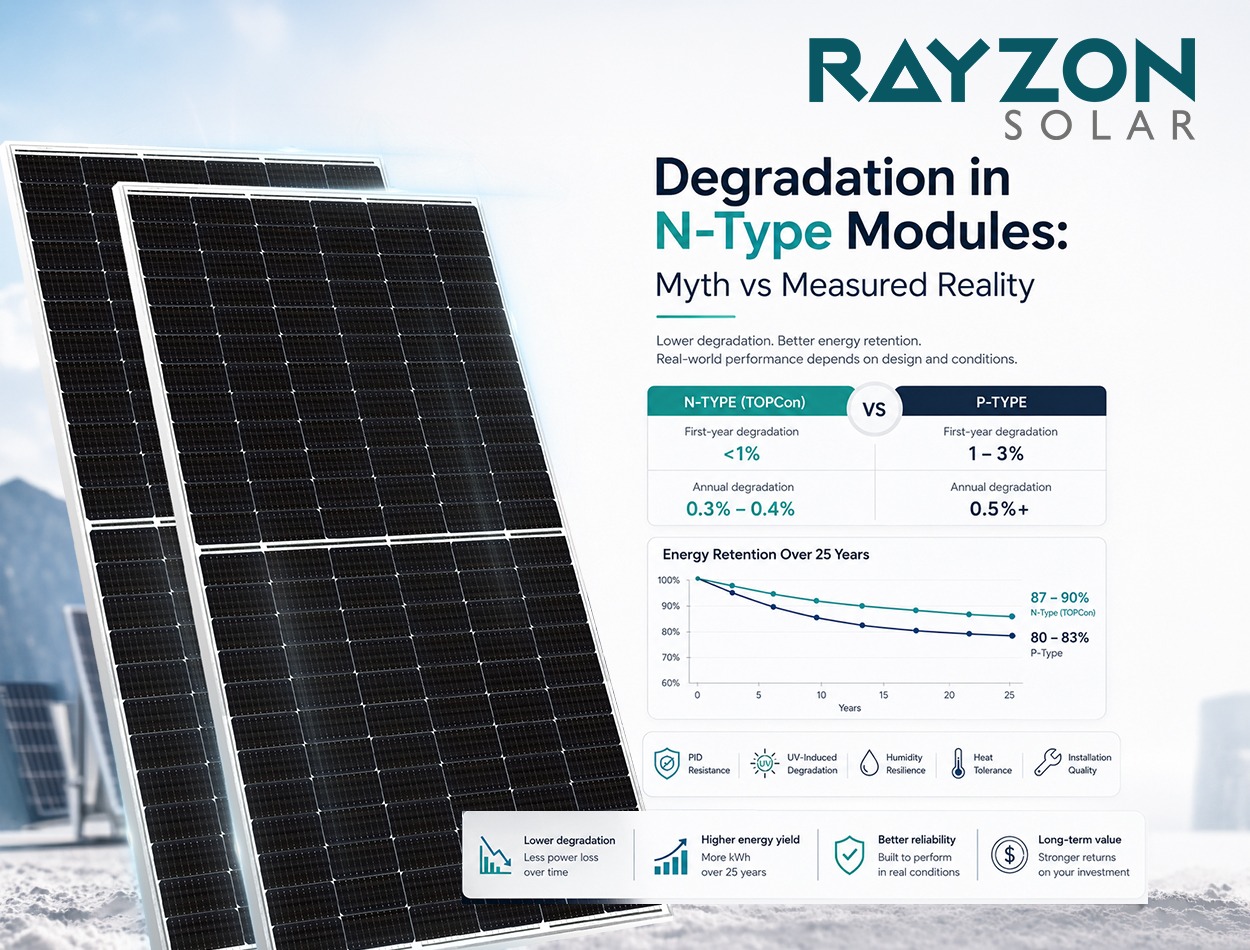
Traditional P-Type PERC modules often suffer from Light Induced Degradation (LID) and Light and Elevated temperature induced (LeTID) losses which is typically seen in climates having higher ambient temperatures. N-Type technologies such as TOPCon and HJT reduce these effects because they avoid boron-oxygen defects. Independent testing shows N-Type modules can limit first-year degradation below 1%, while many P-Type modules lose 1-3% early in operation.
Field performance data also supports lower annual degradation. Recent industry studies place N-Type annual degradation between 0.3% and 0.4% per year post first year standard degradation. Many P-Type systems still operate closer to 0.5% or higher. Over 25 years, this gap creates a significant energy yield advantage. However, lower degradation does not mean zero degradation.
Potential Induced Degradation (PID) remains a critical factor. High voltage stress, humidity, and heat can still affect modern modules. Research published in npj Materials Degradation confirmed that PID can reduce module performance and create hotspots under severe conditionsAt the same time, modern N-Type designs show stronger PID resistance than earlier technologies. Advanced encapsulation, glass-glass structures, and anti-PID materials now improve long-term reliability.
Another emerging topic is UV-induced degradation. Testing organizations such as Kiwa PVEL reported that some TOPCon and HJT modules showed measurable UV-related losses during accelerated testing. Still, manufacturers continue improving cell architecture and encapsulant chemistry to address this challenge.
Real long-term output depends on more than cell type alone. Installation quality, climate, thermal cycling, humidity, soiling, and maintenance all influence system health.
The measured reality is clear. N-Type modules offer lower degradation and stronger energy retention. But long-term performance comes from both advanced technology and robust system design.