The Hidden Cost of Lower Silver Usage in Solar Cells
Why Reducing Silver Is Not Always a Risk-Free Decision
The solar industry is working hard to reduce silver consumption in photovoltaic (PV) cells. Rising silver prices and increasing global demand have encouraged manufacturers to explore alternative metallization technologies. While these efforts can lower production costs, they can also introduce technical, reliability, and bankability concerns that may impact long-term project performance.
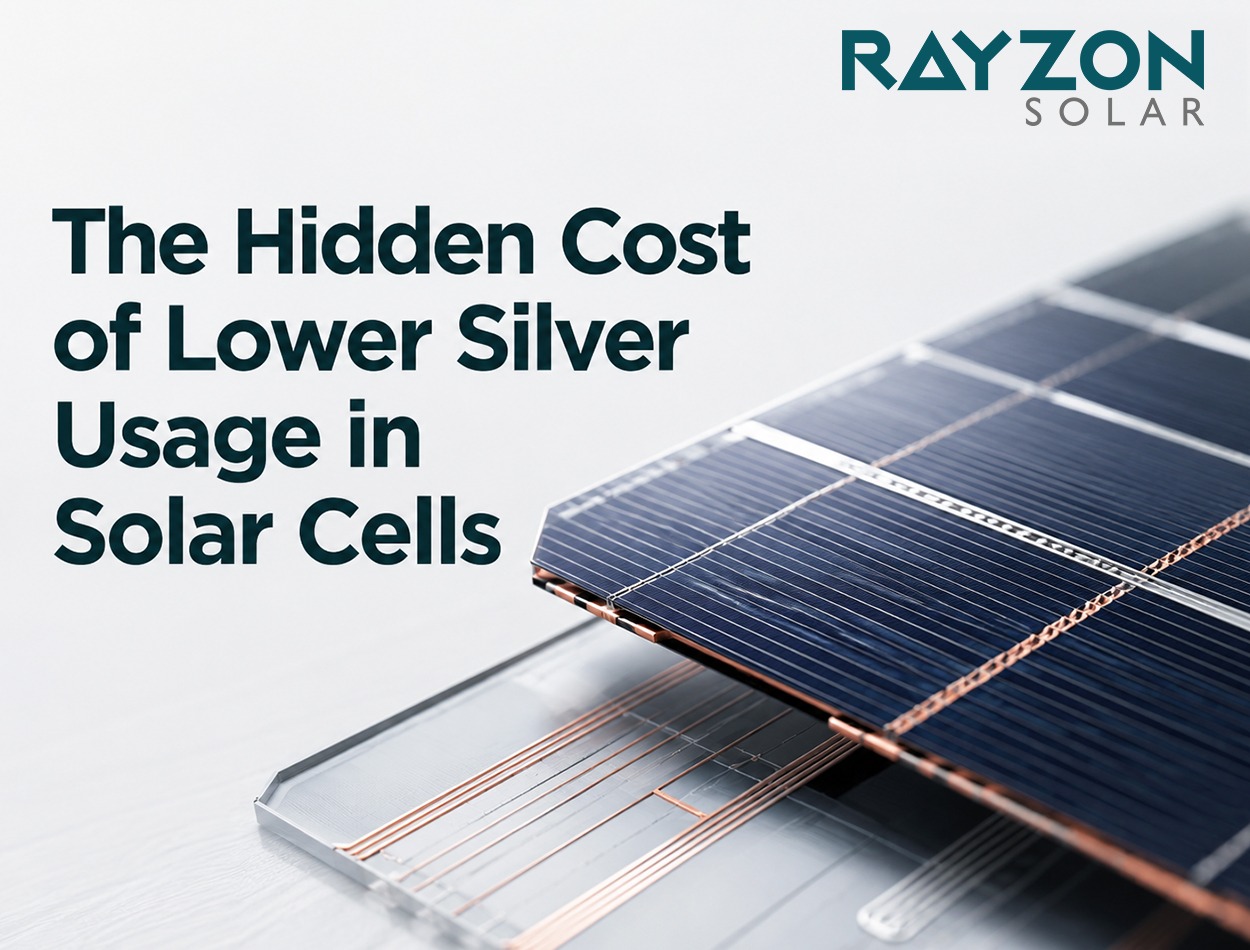
Silver remains one of the most important materials in solar cell manufacturing. It forms the conductive fingers and busbars that collect and transport electricity generated by the cell. Its exceptional electrical conductivity, corrosion resistance, and long-term stability make it highly reliable in outdoor environments.
According to the International Energy Agency (IEA), global solar installations continue to grow rapidly, increasing demand for key raw materials, including silver. This has prompted manufacturers to reduce silver loading per watt and investigate alternatives such as copper plating.
The Push for Lower Silver Usage
Manufacturers have successfully reduced silver consumption over the past decade through thinner grid lines, optimized screen-printing techniques, and advanced cell architectures. The primary objective is simple: lower material costs and improve manufacturing economics.
However, reducing silver beyond certain thresholds can create challenges. Finer fingers may increase electrical resistance, potentially affecting energy yield over the module's lifetime. Lower silver content can also reduce tolerance to environmental stress and degradation mechanisms.
Copper Plating: Opportunity and Challenge
Copper has emerged as the leading alternative to silver because it is significantly cheaper and more abundant. In theory, copper-plated solar cells can deliver comparable electrical performance. In practice, the technology introduces additional manufacturing complexity.
Copper is highly susceptible to oxidation. If protective barrier layers fail or manufacturing quality varies, copper can diffuse into the silicon structure, causing performance degradation over time. The plating process also requires precise control. Small defects can impact cell reliability, yield rates, and long-term field performance.
Reliability Matters More Than Initial Cost
Solar projects are designed to operate for 25–30 years or more. During this period, modules face extreme temperatures, humidity, UV exposure, and mechanical stress.
Silver has a proven record of accomplishment under these conditions. Its long-term stability contributes to predictable energy generation and lower performance risk.
New metallization approaches must demonstrate similar durability through extensive accelerated aging tests and real-world field data. Without sufficient validation, lower upfront costs may translate into higher long-term risks.
The Bankability Factor
For developers, investors, and lenders, bankability is just as important as efficiency. Financial institutions evaluate not only module performance but also technology maturity, reliability history, and manufacturer credibility. Technologies with limited field data often face greater scrutiny during project financing.
A module that saves a few cents during manufacturing but introduces uncertainty over 30 years may ultimately increase financing costs or investor concerns.
Finding the Right Balance
Reducing silver usage is an important step toward making solar energy more affordable and scalable. However, material cost reduction should never come at the expense of reliability, durability, or long-term performance.
The future of solar manufacturing lies in balancing innovation with proven quality. As the industry adopts new metallization technologies, rigorous testing, robust quality control, and long-term validation will remain essential.
In solar, the lowest manufacturing cost is not always the lowest lifetime cost. Reliability remains the foundation of sustainable value creation.