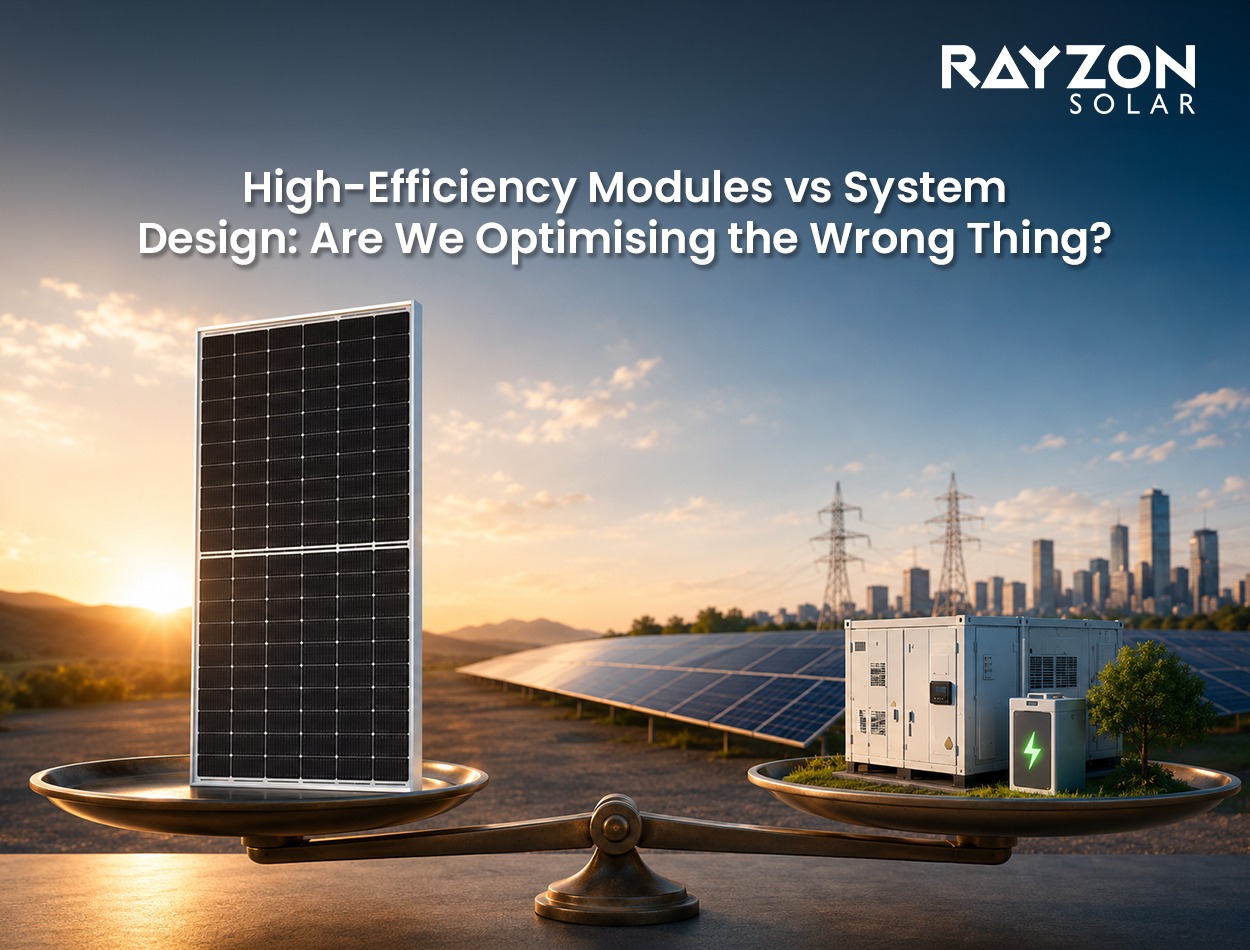
High-Efficiency Modules vs System Design: Are We Optimising the Wrong Thing?
The solar industry often celebrates module efficiency. Manufacturers now offer panels with efficiencies above 24%. But higher module efficiency alone does not guarantee higher yield or system performance, only a slightly reduced footprint. The real question that we should be asking is whether we are optimising the entire solar system or only the panel.
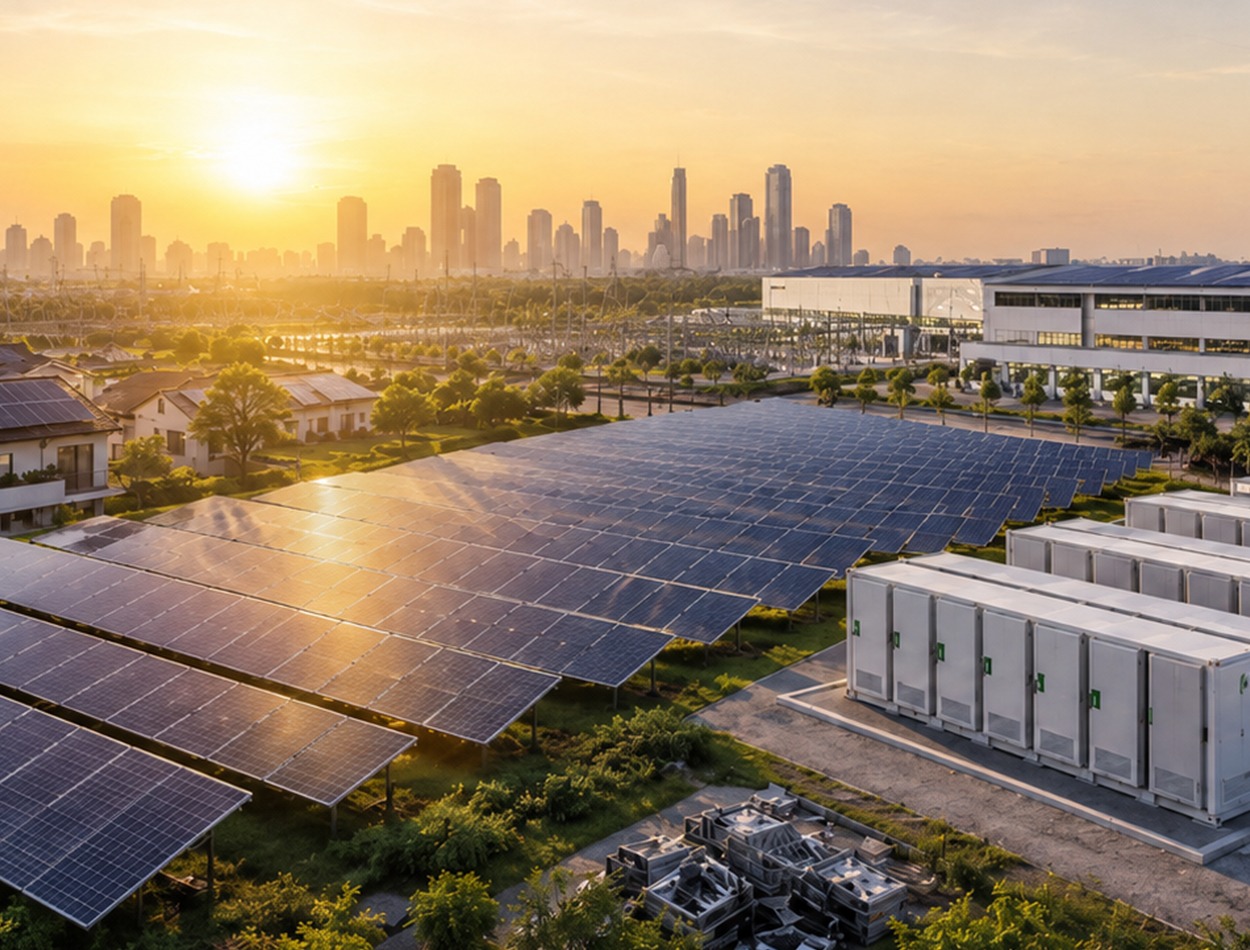
A solar plant performs as a complete ecosystem. Solar panels, inverters, DC/AC ratio, ambient temperature, and grid conditions all shape energy output. In many projects, system design matters more than module efficiency.
A common example is the DC/AC ratio. This ratio compares total DC module capacity installed with inverter AC capacity. Most modern systems operate between 1.2 and 1.5. Utility-scale projects increasingly use higher ratios to improve annual yield by increasing generation at the tail ends rather than only in the middle of the day.
The Reason
Solar modules rarely operate at their STC ratings. Ambient temperature, dust, varied irradiance, and ageing reduce real-world output. A slightly oversized DC array keeps the inverter operating near peak efficiency for longer hours during the day.
This approach introduces inverter clipping. Clipping occurs when DC generation exceeds the inverter's AC capacity during peak sunlight hours. The inverter limits output and “clips” excess power, making a flat generation curve. While this may sound inefficient, controlled clipping often improves annual energy generation and lowers system costs.
Utility-scale developers understand this trade-off well. According to industry studies, average inverter loading ratios in large solar projects have steadily increased over the last decade as developers optimise Levelized Cost of Energy (LCOE), not just module efficiency.
Higher-efficiency modules help when land is limited and space is a constraint. But system-level optimisation delivers stronger financial returns. Smart inverter sizing, accurate energy modelling, tracker selection, and storage integration can unlock greater value than chasing marginal efficiency gains alone.
The future of solar will not belong only to the most efficient module. It will belong to the most intelligently designed system.