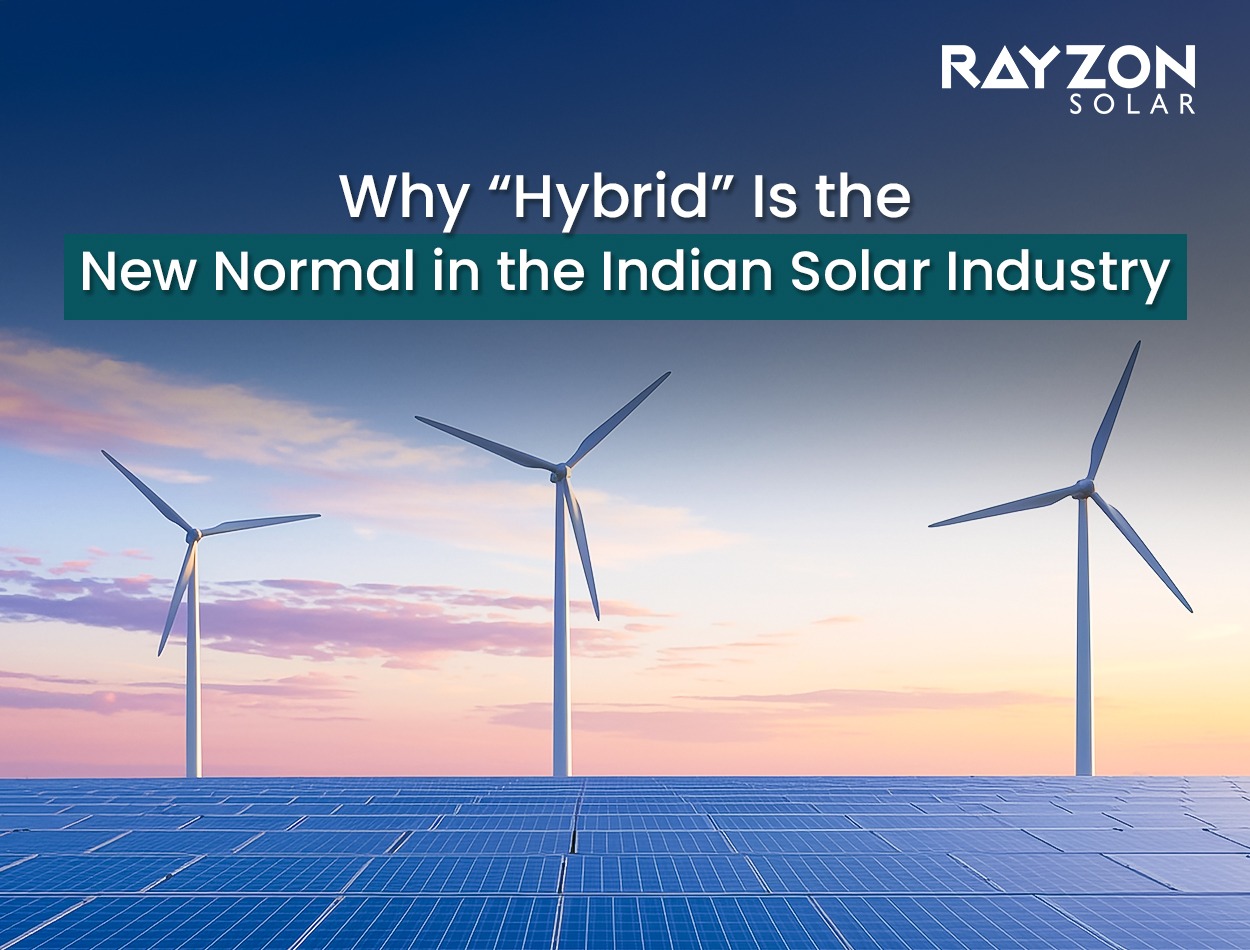
Why “Hybrid” Is the New Normal in the Indian Solar Industry
India’s solar journey has moved beyond just installing panels and generating daytime electricity. As the country adds renewable capacity at record speed, the focus has shifted to reliability, consistency, and grid stability.
This is where hybrid solar systems are stepping in.
What Are Hybrid Solar Systems?
A hybrid solar system uses more than one renewable or support source to generate power.
In India, the most common hybrid combinations are:
- Solar + Wind
- Solar + Battery Energy Storage (BESS)
- Solar + Wind + Battery (RTC or firm power projects)
Each combination solves a different problem — and together, they help make renewable power more reliable and dependable.
Solar + Wind Hybrid Systems
One of India’s biggest advantages is its diverse renewable geography. Many regions receive strong sunlight during the day and high wind speeds during evenings, nights, or monsoon months.
Why this model works well?
- Solar generates power during the day
- Wind often peaks at night and during monsoon
- When solar slows down, wind often picks up
This natural balance allows projects to deliver higher PLF, in simple words power for more hours of the day without storage.
States like Gujarat, Rajasthan, Tamil Nadu, Karnataka, and Maharashtra are leading adopters of solar-wind hybrid projects, supported by national hybrid policies and SECI tenders .
Benefits of Solar + Wind Hybrid Projects
- Higher capacity utilization factor (CUF)
- Better land and transmission infrastructure use
- Lower power variability
- Reduced dependence on fossil-fuel backup
Because of these advantages, solar-wind hybrid projects are increasingly preferred for large utility-scale installations and open-access industrial power.
Solar + Battery Storage Hybrid Model
While solar + wind improves availability, battery energy storage systems (BESS) solve a different challenge - timing.
Solar power is abundant during the day, but electricity demand in India peaks in the evening hours. Battery storage allows excess solar energy to be stored and used later, improving dispatchability — the ability to supply power when the grid needs it, not just when it is generated .
Why Storage Is Gaining Momentum
- Evening peak demand support
- Grid stability and frequency control
- Reduced curtailment of renewable power
- Support for round-the-clock (RTC) tenders
India is actively promoting BESS through policy incentives, transmission charge waivers, and large-scale pilot projects, signalling strong long-term intent .
Solar + Wind + Storage Hybrid Model
The most advanced hybrid model combines solar, wind, and battery storage to deliver near-continuous clean energy.
These systems are now being used for:
- RTC (Round-the-Clock) renewable power
- Peak power supply contracts
- Large industrial and utility PPAs
Government agencies and utilities are increasingly floating tenders that demand assured power blocks, which only such multi-source hybrid systems can reliably deliver .
Hybrid Systems Significance in Large-Scale Projects
Hybrid renewable systems are not a trend — they are a response to real grid and market needs.
Key drivers include:
- Rising electricity demand during non-solar hours
- Pressure on DISCOMs to ensure reliable supply
- Better economics through higher utilization
- Strong government push for renewable integration
India’s renewable strategy now focuses not just on capacity addition, but on quality, reliability, and grid friendliness — all of which hybrids support .
The Impact on Indian Solar Industry
For developers, EPCs, and manufacturers, hybrid systems open new opportunities:
- Designing modules for hybrid operating conditions
- Supporting projects in high-wind and high-temperature zones
- Delivering solutions for utility-scale and industrial energy needs
For India, hybrids mean faster progress toward energy security, lower emissions, and a more resilient power system.
India’s Renewable Future Is Hybrid
India’s clean energy future will not rely on a single source. Solar, wind, and storage will work together, each playing its role at different times of the day and year.
Hybrid solar systems make renewable energy more predictable, more reliable, and more scalable, which is why they are rapidly becoming the backbone of large-scale solar projects across the country.
For forward-looking solar manufacturers like Rayzon Solar, this evolution represents an opportunity to support the next generation of India’s renewable infrastructure.