More Blogs for You
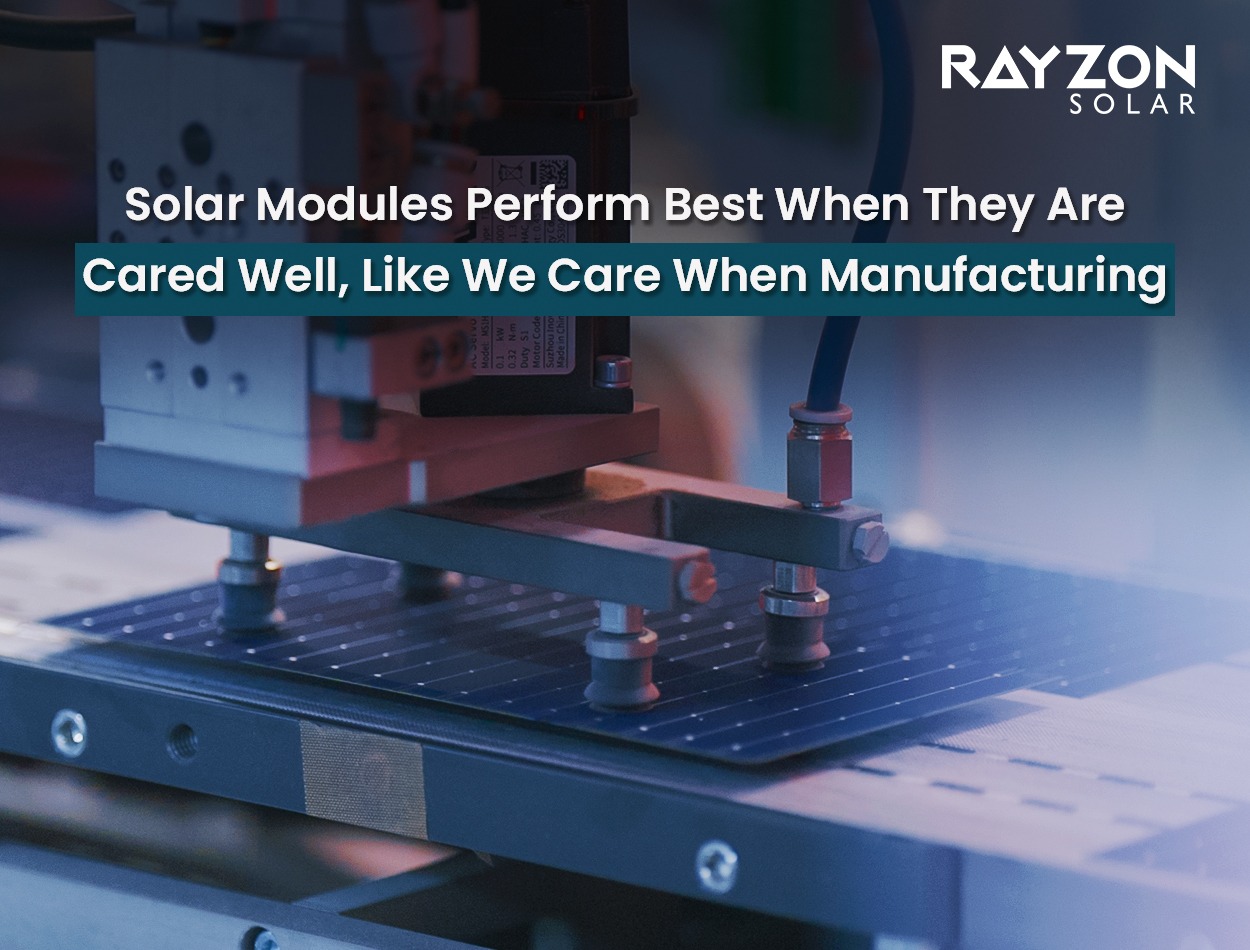
Solar modules Perform Best When They Are Cared well, like we care when manufacturing
At RAYZON Solar, we seriously take our shared responsibility right from the selection of materials to storage and handling, precise control of process control to performance consistency in real Indian conditions. Our approach is rooted in one belief: solar value is created over decades and not commissioning dates.
Read More..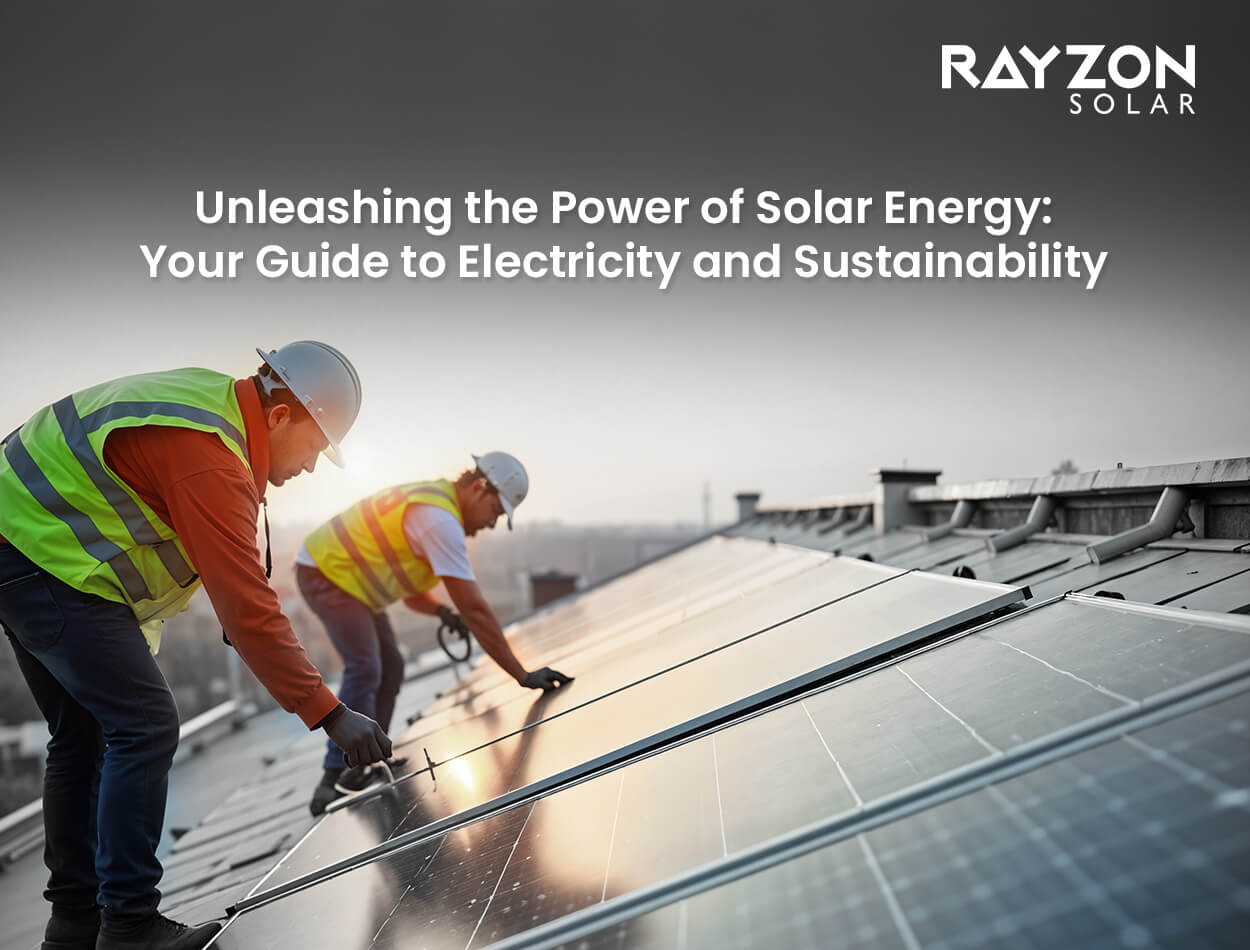
Unleashing the Power of Solar Energy: Your Guide to Electricity and Sustainability
In the face of rising energy demands and environmental challenges, solar energy has emerged as a sustainable and efficient alternative to traditional power sources. Rayzon Solar, a global leader in solar power systems and innovative photovoltaic cells, is at the forefront of this transformation. Understanding its benefits and implementation becomes crucial as more households and businesses shift towards solar electricity. This comprehensive guide explores how solar panels work, their advantages, and the role of companies like Rayzon Solar in advancing renewable energy solutions.
Read More..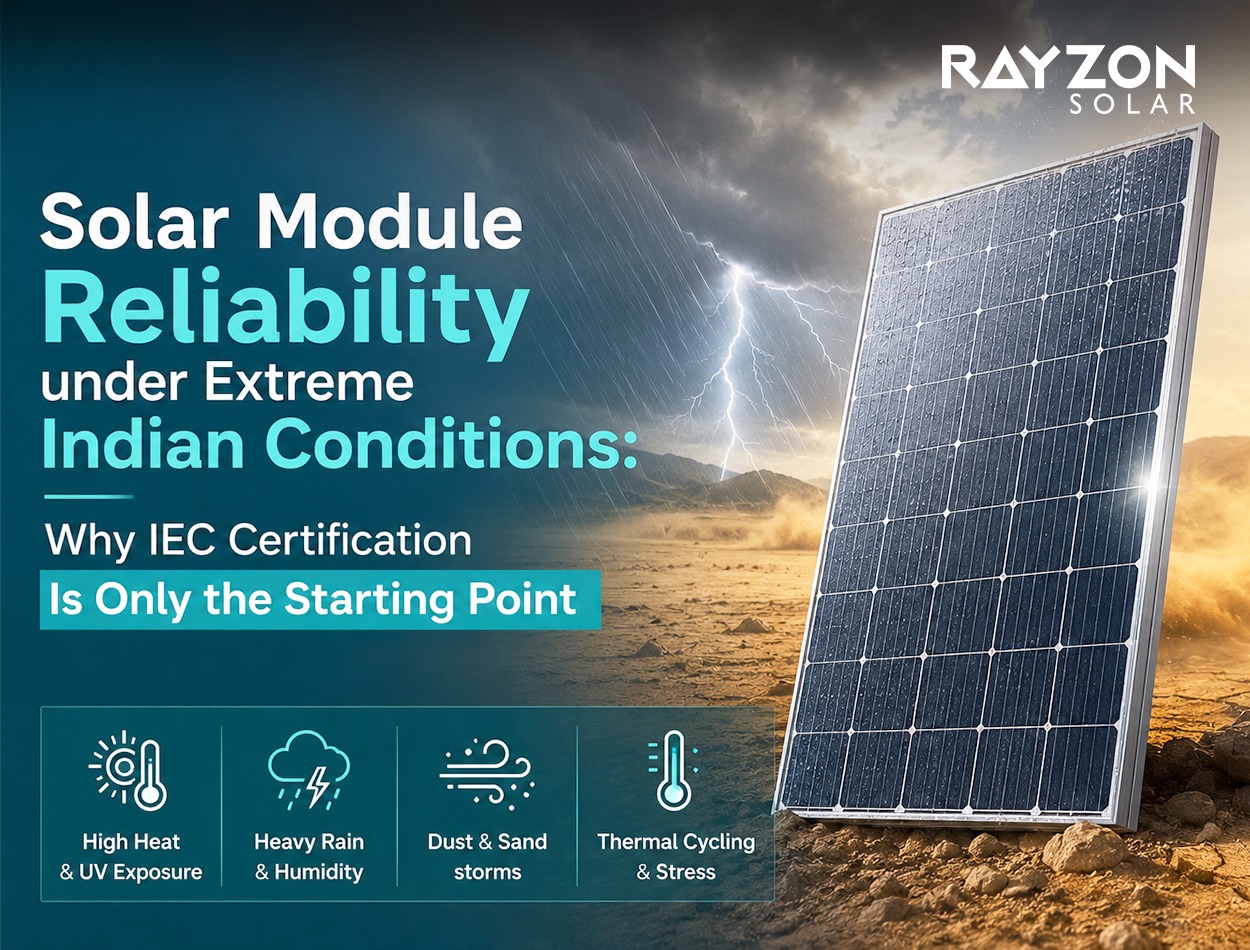
Solar Module Reliability under Extreme Indian Conditions: Why IEC Certification Is Only the Starting Point
India offers one of the world's strongest solar resources. However, it also presents one of the harshest operating environments for photovoltaic (PV) modules. High temperatures, coastal humidity, desert dust, intense UV radiation, dust combined with fuel emissions and agricultural emissions continuously challenge module performance. Choosing a module based only on IEC certification may not ensure long-term reliability.
Read More..