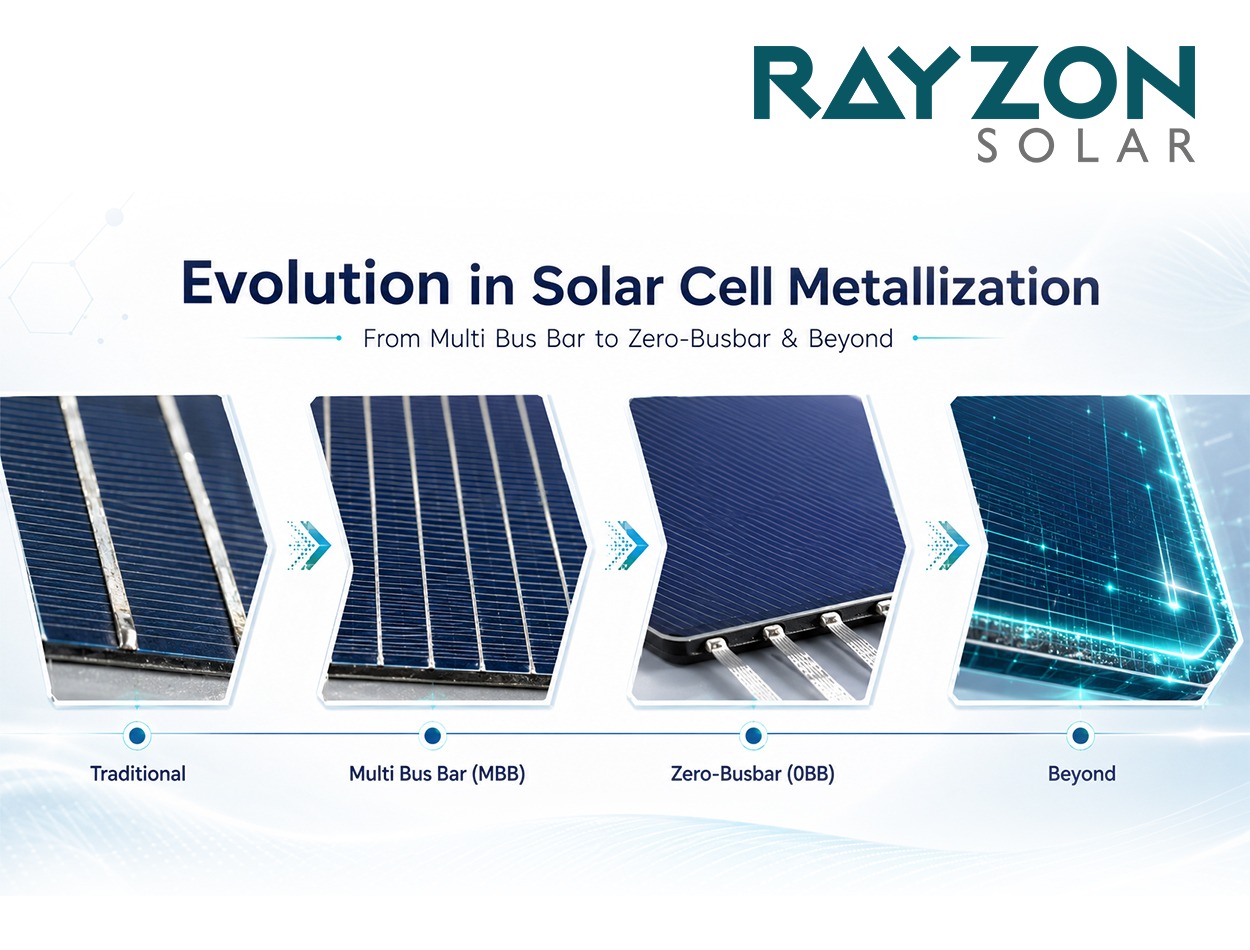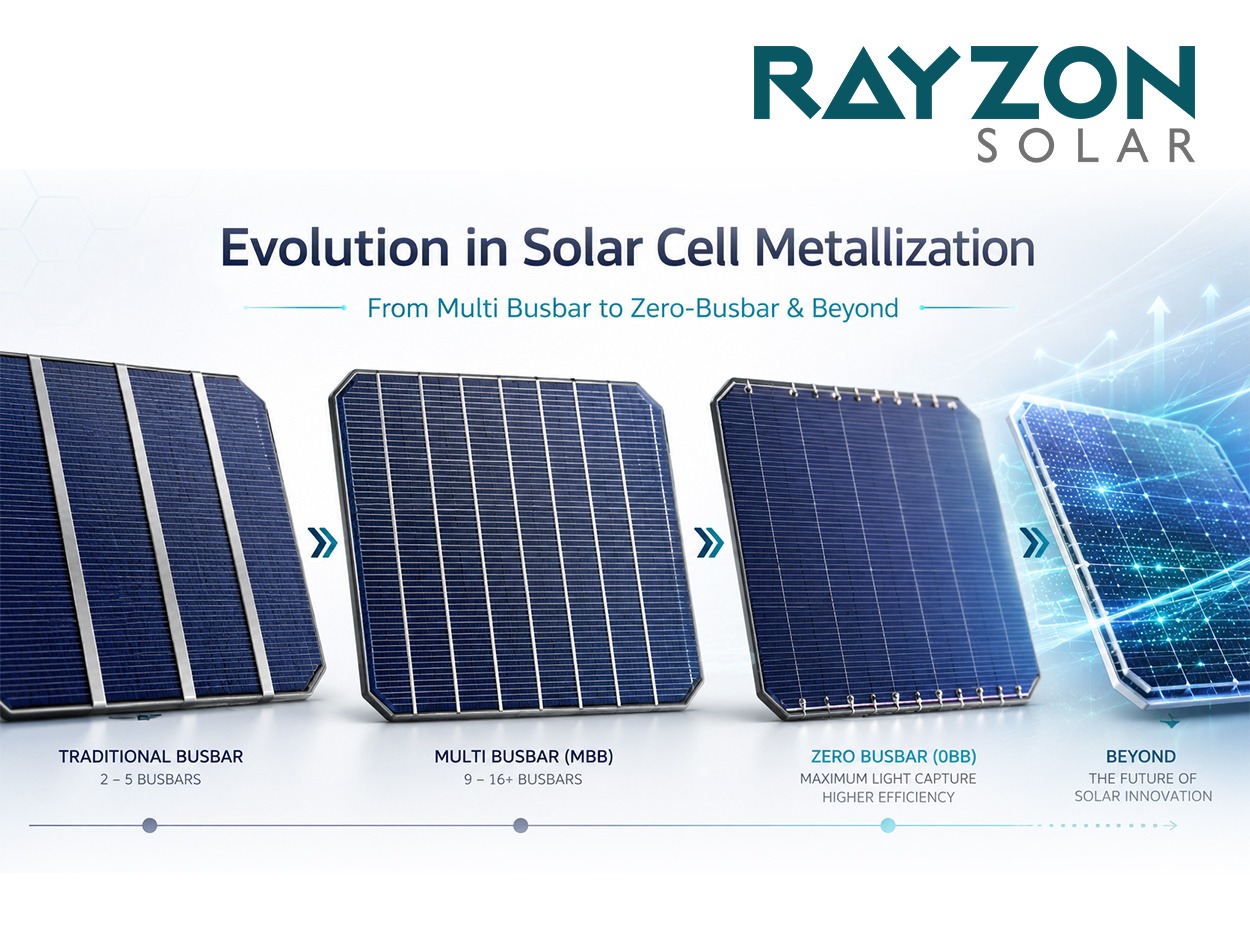
Evolution in Solar cell Metallization: From Multi bus bar to Zero-Busbar & Beyond
Solar cell Metallization is the critical manufacturing process of creating metal contacts (electrodes) on the front and back of a solar wafer to extract electrical current. It primarily involves screen printing silver paste (front) and aluminium paste (back) to form fingers and busbars.
Earlier solar cells used have less i.e. 2–5 busbars on the cell surface as the surface area of cell used to be smaller as well as less efficient cells thereby less current to carry. However, with the evolution of M10/M10R/G12R/G12 wafers the size of cells started getting bigger and with high current generated it was obvious choice to shift to multi bus bar designs to effectively collect the current from entire cell region more effectively. As busbar as well figures too cast the shadow on active cell area it’s prudent to have a balance between the number of busbars to catch currently more effectively and its dimensions to reduce shadowing.
The next evolution what we see is cells with no thick busbar in front area of the cell, helping in increasing area of the cell on which light can be incident thereby improving efficiency also popularly called as Zero Bus bar or 0BB technology. This is achieved by removing the busbars and directly connecting the fingers to the ribbons via solder points.
In the next blog we would elaborate on the process of achieving Zero bus bars with its advantages as well as disadvantages.