Why Negative Temperature Coefficient Matters in the Performance of Solar Power Generation
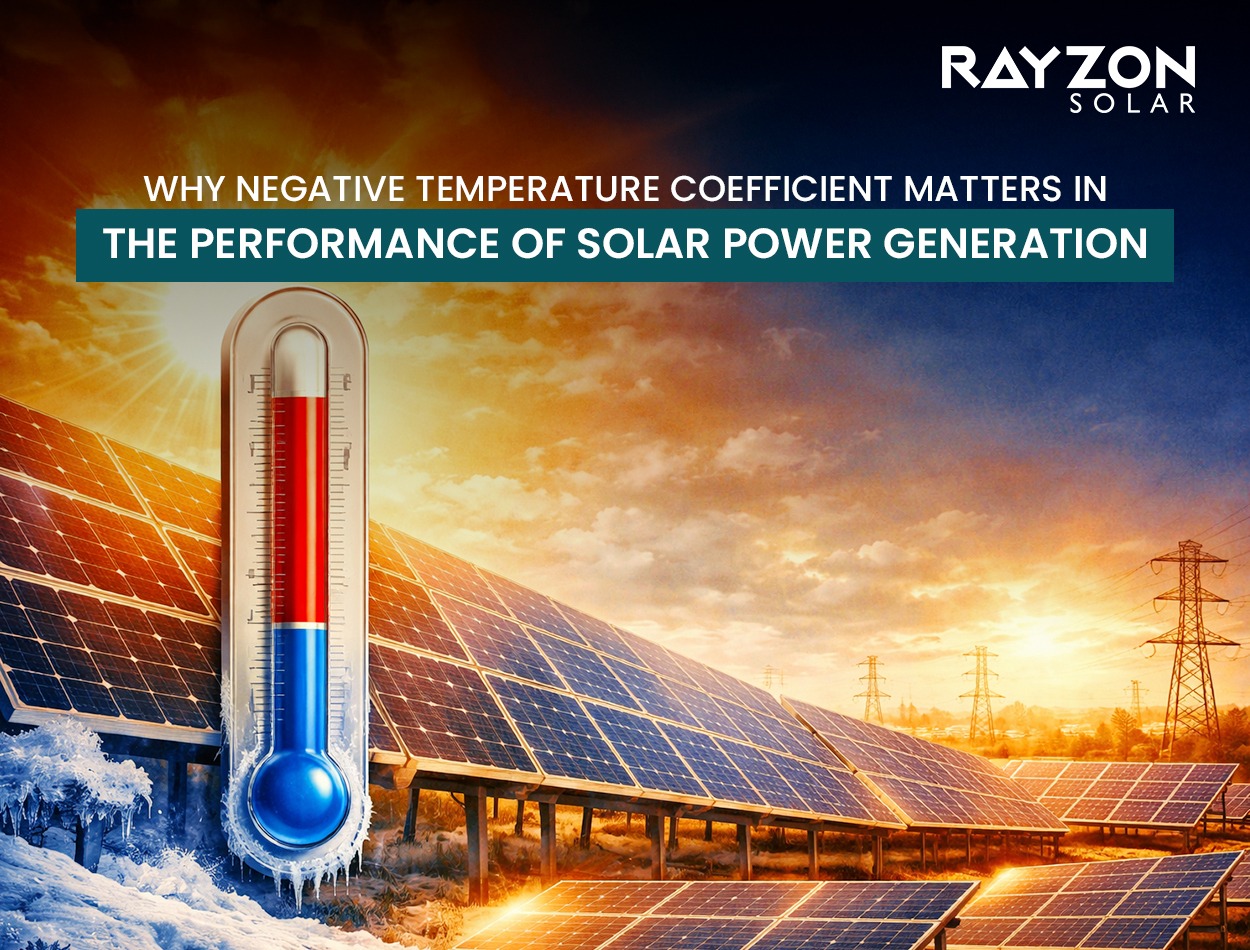
When people think of solar panels, they often assume more heat means more power. But that’s not the case; let's understand how ambient temperature plays a role in the generation or yield of a solar power-generating system.
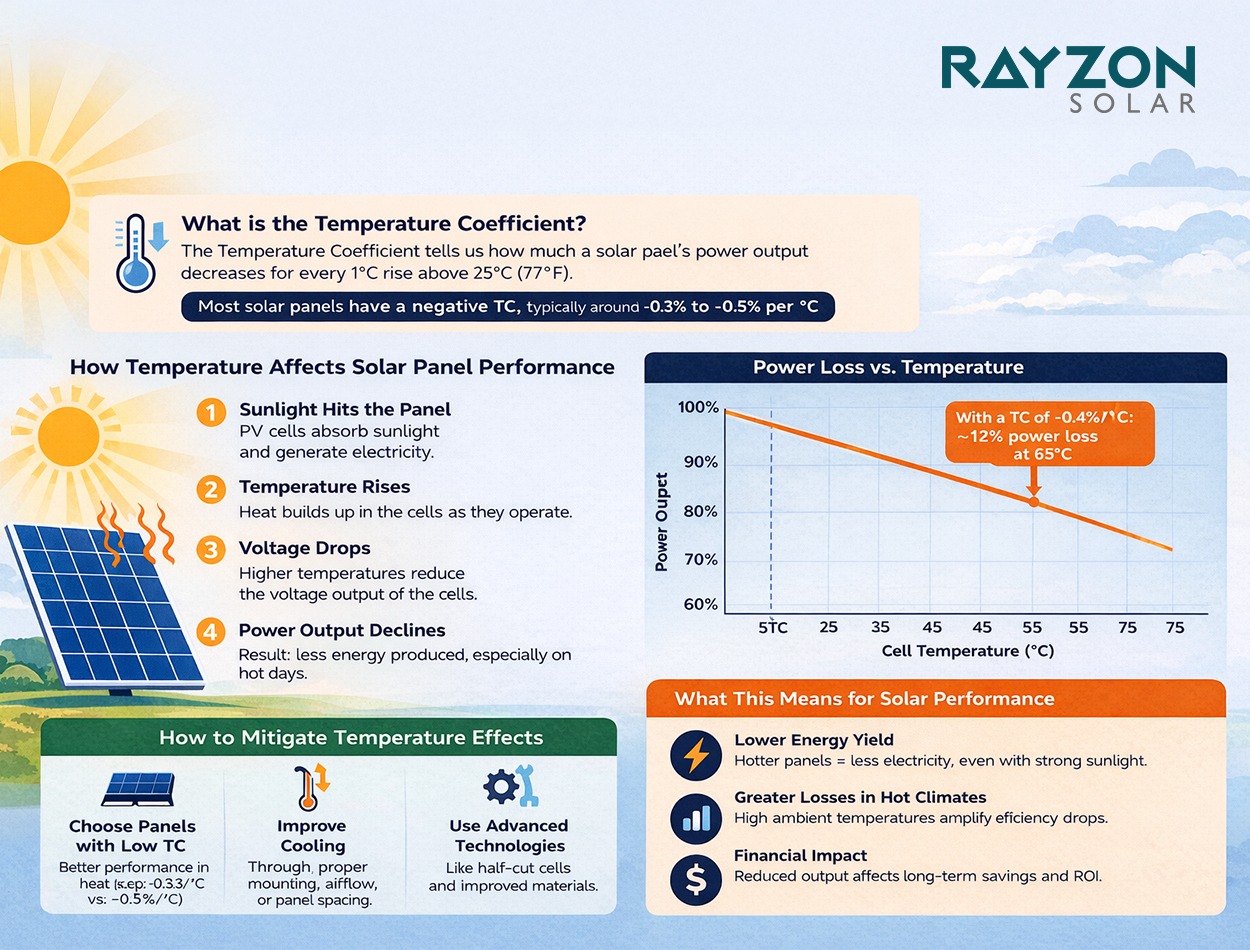
Solar PV panel is an assembly of solar cells whose basic raw material is nothing but electronic-grade silicone, which is also commonly used in semiconductor devices, including chips used in electronic gadgets. The performance of a semiconductor largely depends upon temperature; the cooler the operating temperature, the better the performance, and the hotter the temperature, the worse the performance. This phenomenon in solar PV panels is captured under the specification called the negative temperature coefficient, which is also integrated as a part of STC, i.e. Standard testing conditions. In STC, the temperature at the cell level is defined at 25°C, so any increase in ambient temperature is going to increase the cell level temperature.
In conditions like India, our ambient temperature itself hovers around 30°C, which, as the cell is converting light into electricity, it also oozes heat, which adds another 20-22°C. So, the effective temperature at the cell level would be around 50-52°C, effectively reducing power generation based on the specifications of solar modules. Considering -0.35% of negative temperature coefficient for a panel, it’s going to lose (50-30) X 0.35% of its generation.
In a nutshell, the lower the ambient temperature, the better the generation from a solar PV panel. Over and above this phenomenon, dominated by the quality of solar modules, another factor that impacts generation is Annual degradation and then yearly degradation. We will delve deep into this topic in our next blog.