Performance Ratio: A Simple Guide to Understanding Solar Plant performance against the potential
What is Performance Ratio?
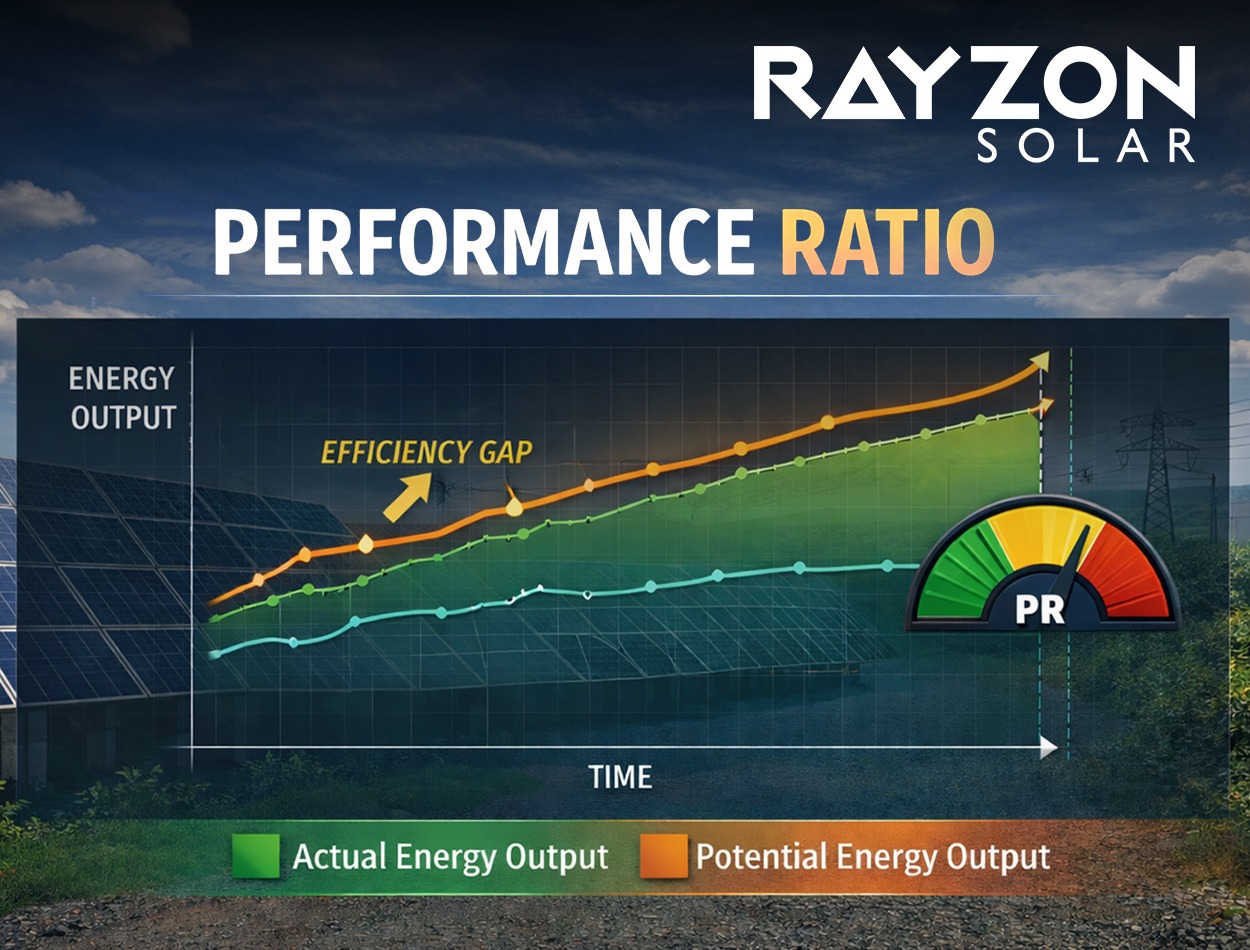
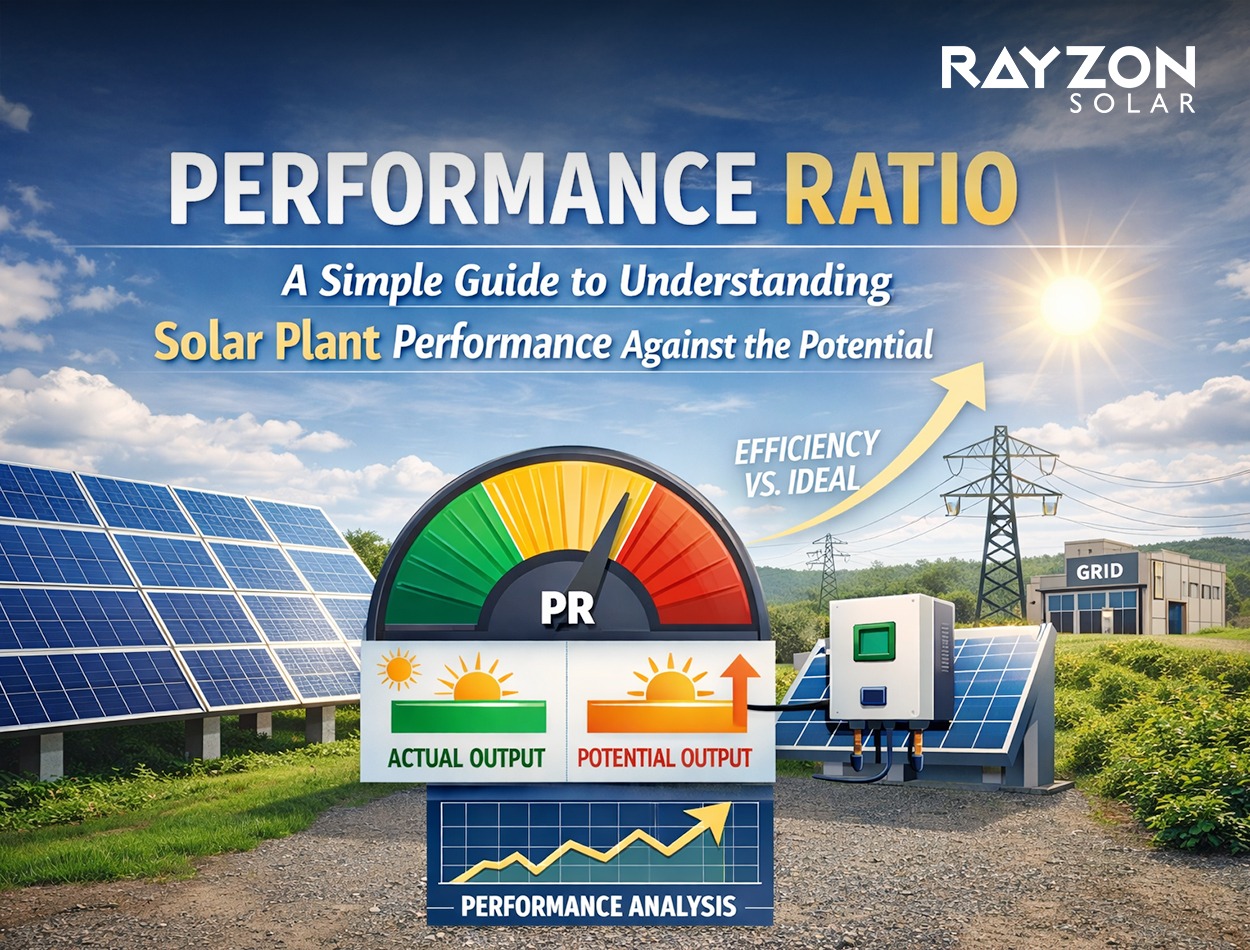
Performance Ratio (PR) is a simple way to understand how well a solar plant is performing its primary duty, i.e. generating energy. It compares the actual energy the plant produces with the maximum energy it could have produced under perfect conditions. In short, it tells you how efficiently your solar system is performing.
The closer the PR is to 100%, the better is the performance. However, reaching 100% is not possible because some energy loss always happens on account of factors beyond our control. A PR of around 80% is considered very good and indicates a well-performing plant.
Several factors affect the PR:
Environmental factors:
- Temperature: Solar panels work best when light is high but ambient temperature is low; the overall generation drops with an increase in temperature.
- Sunlight levels: When the sun is low (morning or evening), the amount of sunlight incident on solar panels is also low, not at the optimum angle, reducing generation and PR.
- Shading: Shadows and partial shading on account of obstructions from objects like nearby buildings, trees, dust, or snow can have a significant impact on generation, thereby reducing generation.Other factors:
- Measurement period: In countries like India, we have many seasons, and average daily sunlight varies from day to day as well as season to season. So ideally, PR should be measured on an annualised basis so that all the variations are taken care of, rather than fretting over day-to-day performance. Day-to-day measurements can be used only as an indication of the overall health of the system.
- Quality of Equipment: Good quality components would contribute to boosting generation, while lower quality components used in the system would lead to a compromise. All electrically active components used in the system, from solar modules, Inverters, JBs, and cables (DC+AC) contribute to system efficiency.
- System: Overall design, engineering and actual installation as well as regular maintenance, also equally contribute to the great quality of material used while building the system.
Overall, as the system starts ageing, there would be wear and tear in the components over and above degradation in solar modules, thereby reducing PR gradually in every passing year for the system.
Why is PR important?
PR helps track performance over a period as well as gives you the current health status of the system on regular basis. This parameter can become your ready reckoner for performance monitoring.