Perovskite Tandem Modules: Breakthrough or Manufacturing Nightmare?
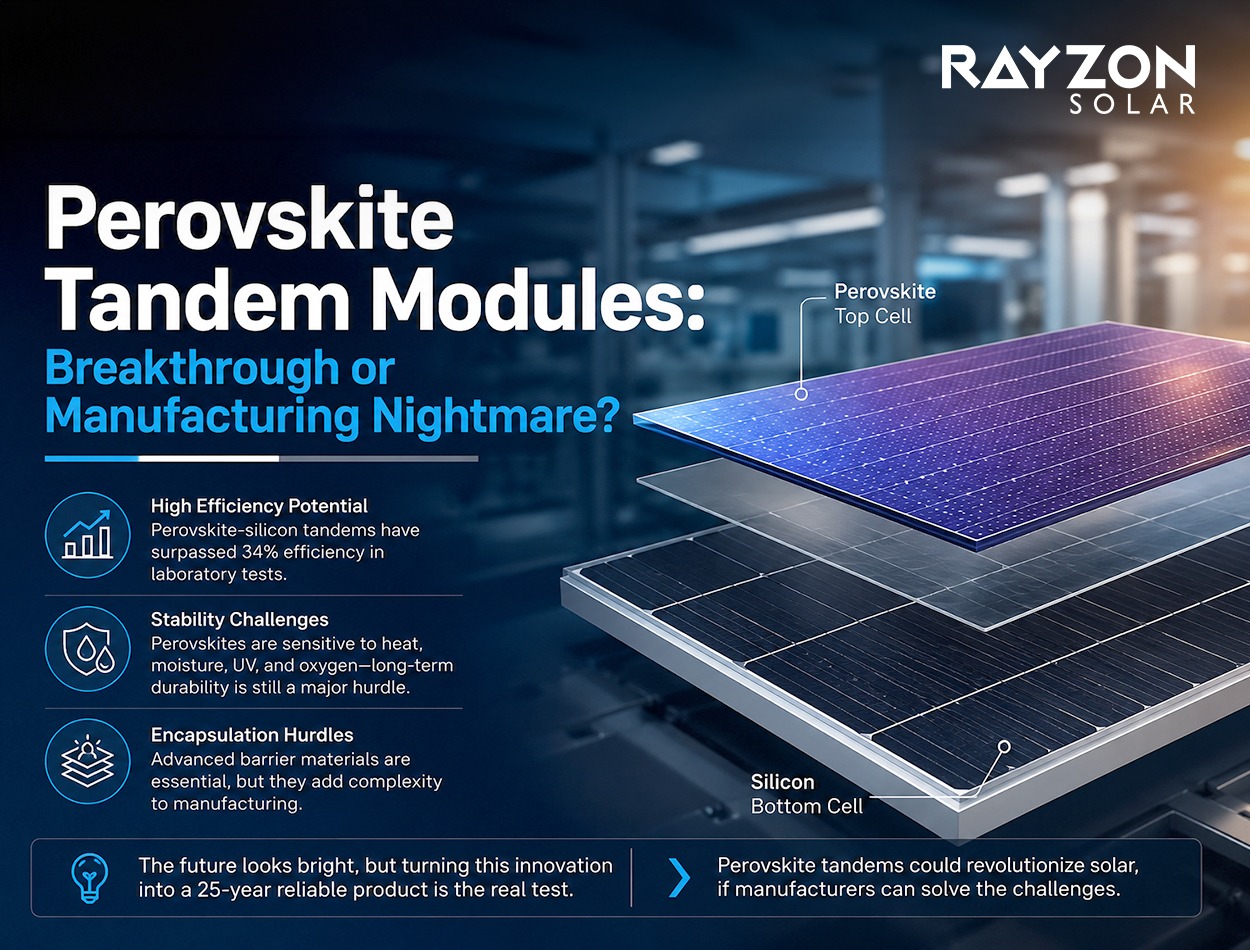
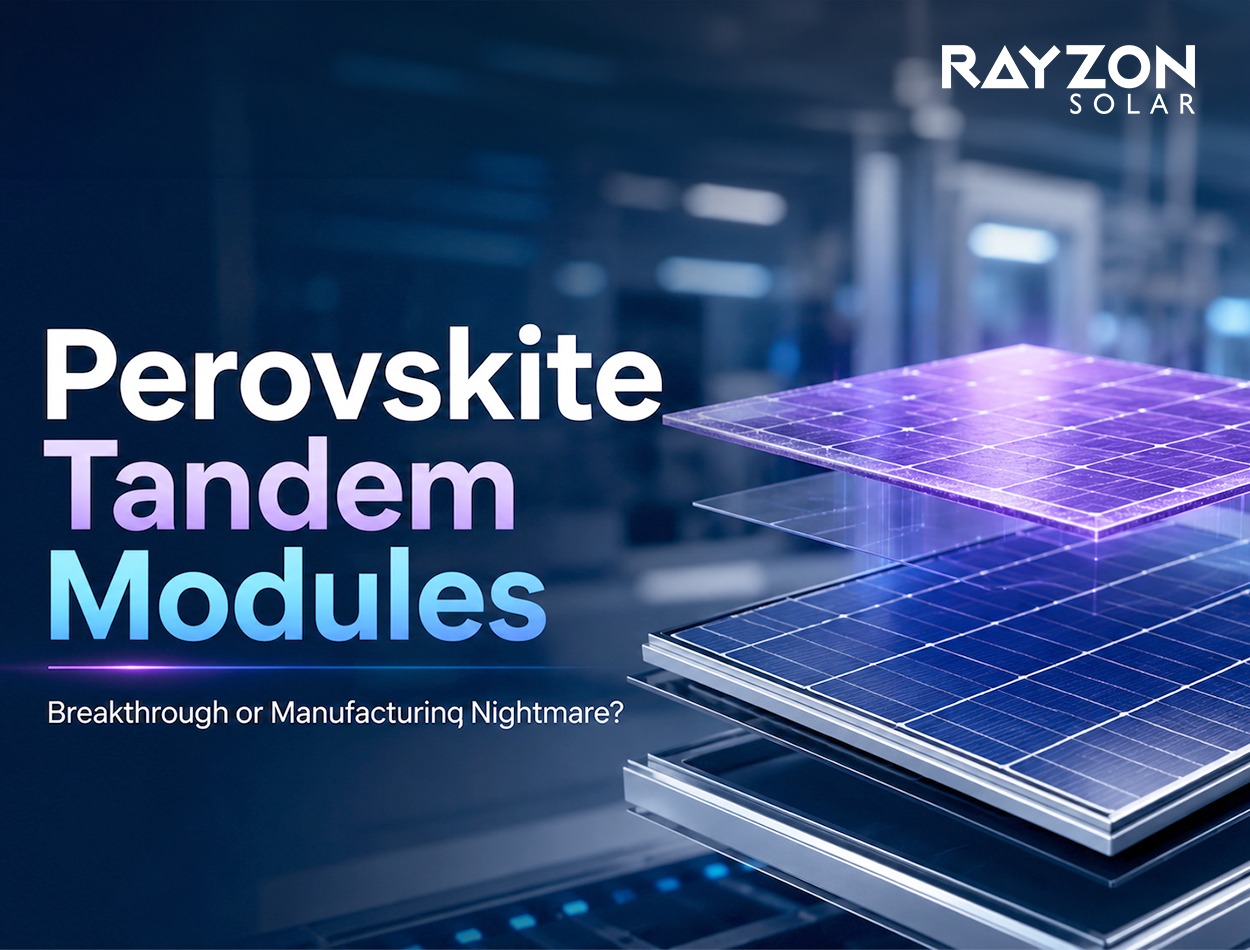
Perovskite tandem solar modules promise to reshape the solar industry. By combining a perovskite top cell with a silicon bottom cell, these modules capture more sunlight than conventional silicon panels. Laboratory devices have already demonstrated efficiencies exceeding 34%, making them amongst the most exciting innovations in photovoltaics in recent years. Yet, high efficiency alone does not guarantee commercial success.
The biggest challenge is long-term stability. Perovskite materials degrade faster than silicon when exposed to heat, moisture, ultraviolet light, and oxygen. Even minor material changes can reduce performance over time. Researchers continue to improve stability, but manufacturers must prove that tandem modules can deliver reliable power for 25 years or more before large-scale adoption becomes realistic.
Encapsulation presents another hurdle. Unlike traditional silicon modules, perovskite tandem designs require advanced barrier materials and sealing techniques to protect sensitive layers from environmental damage. Better encapsulation improves durability, but it also increases manufacturing complexity.
Scalability remains equally important. Most record-breaking efficiencies come from small laboratory cells produced under controlled conditions. Commercial production demands uniform coating, precise layer deposition, and high manufacturing yields across full-size modules. Achieving this consistently at gigawatt scale remains a significant engineering challenge.
Commercialization is progressing, but it will take time. Several manufacturers have moved from laboratory research to pilot production, while industry experts expect broader commercial deployment only after reliability testing, certification, and manufacturing processes mature. The next few years will determine whether perovskite tandem technology can transition from innovation to mainstream solar manufacturing.
For the solar industry, the opportunity is undeniable. Higher module efficiency can lower electricity costs by generating more power from the same installation area. However, success depends on solving durability, manufacturability, and scalability together.
Perovskite tandem modules are not a manufacturing nightmare. They are an engineering challenge that demands rigorous research, robust quality control, and scalable production. Companies that overcome these barriers will define the next generation of high-performance solar technology. RAYZON has been working in this space of Tandem Technology with reliable and equally committed partners to make this work for the future.