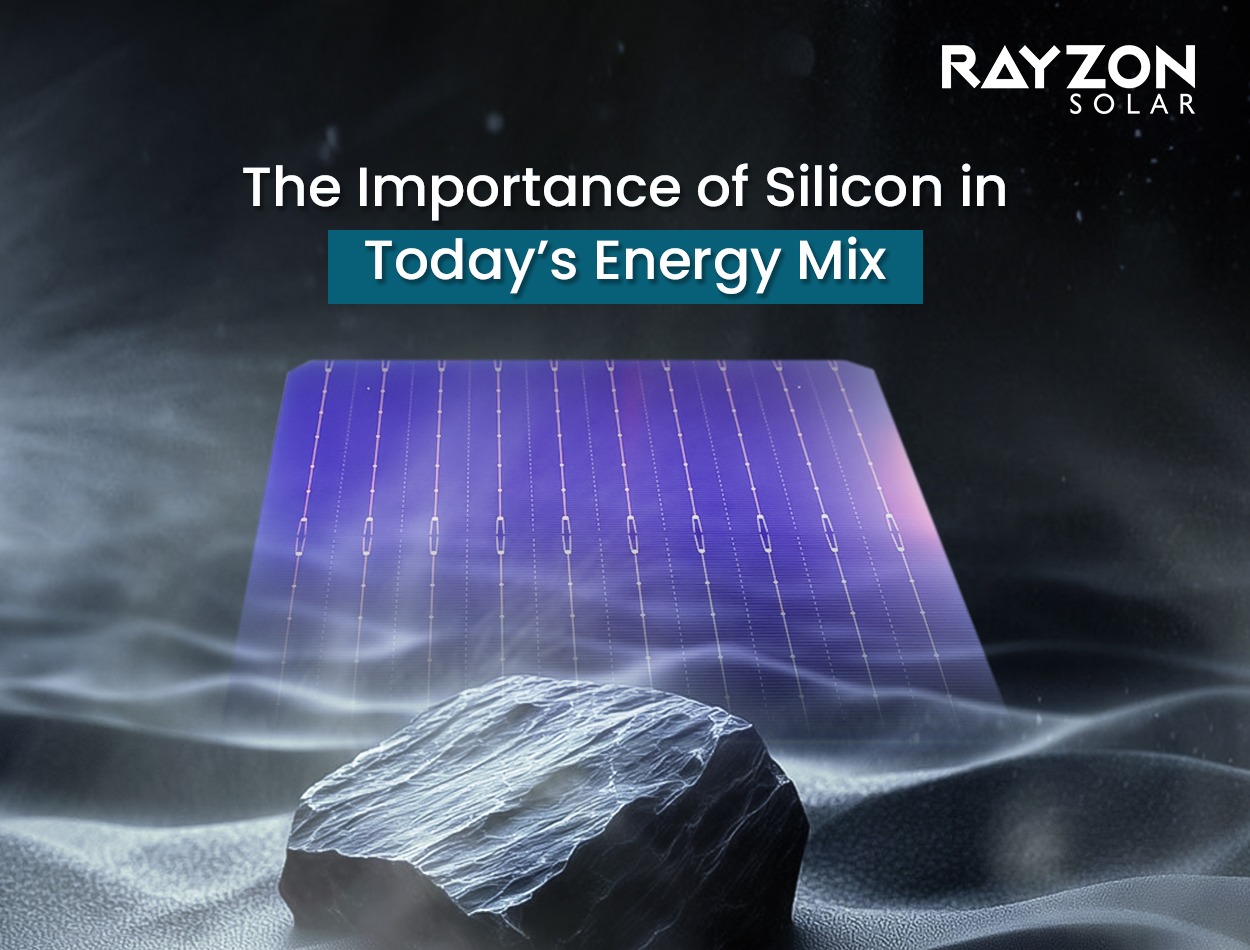
The Importance of Silicon in Today’s Energy Mix
Silicon Matters?
Solar energy is now a fastest growing mainstream power source for homes, businesses, and large-scale power plants. And at the heart of nearly every solar panel lies silicon — a material as common as sand but as powerful as the sun’s promise. Silicon’s unique properties make it the most reliable material for converting sunlight into electricity
What Is Silicon and Why Do We Use It?
Silicon is a semiconductor material which, upon suitable doping, has the potential to be made electrically unstable When sunlight hits this electrically unstable silicone, electrons are “excited” and they flow higher potential to a lower and generate electrical current — that’s how solar electricity is born.
Besides its electrical behaviour, silicon is:
- Abundant and affordable — it’s the second most common element in Earth’s crust, which helps keep solar panel costs down.
- Non-toxic and durable — hence can be safely used for terrestrial applications for a longer duration.
- Well-understood — decades of research on semiconductor helps us in leveraging it better.
How Silicon Influences the Quality of Solar Panels
At its core, solar panel efficiency is about how much sunlight can be turned into usable electricity and its longevity will decide how many years it will keep converting light into electricity. Hence following aspects of Silicon matter the most:
The Right Energy Band Gap
Silicon has a band gap of about 1.1 electron volts (eV) — a sweet spot for absorbing a wide portion of the sun’s visible light. This balance enables silicon to convert more sunlight into electricity without losing significant energy as heat.
Crystal Structure Matters
Solar silicon comes mainly in two forms:
- Monocrystalline Silicon: Made from a single perfect crystal structure. These cells are typically more efficient (>20%+) because electrons move with fewer obstacles.
- Polycrystalline Silicon: Multiple crystals give lower cost but slightly lower efficiency due to tiny boundaries where electrons can recombine and lose energy.
(This is why single-crystal panels currently dominate the market.)
Purity and Manufacturing Quality
High-efficiency silicon cells require extremely pure silicon and advanced manufacturing techniques like surface texturing and anti-reflection coatings. These refinements improve the amount of light absorbed and reduce energy loss inside the cell.
Real-World Efficiency vs Theoretical Limits
In laboratories, optimised silicon cells can surpass 26–27% efficiency, and research continues to push these limits with advanced surface passivation and new structures.
However, real-world commercial modules generally operate around 22–24% under typical conditions.
This gap between lab performance and real field output stems from practical factors like temperature, dust, shading, and wiring losses.
Innovations That Improve Silicon Solar Efficiency
Silicon is not standing still. New developments include:
- N-type silicon cells: Better resistance to heat and shading, improving long-term performance.
- Bifacial or half-cut designs: More sunlight captured and reduced internal losses.
- Tandem cells combining silicon with other materials like perovskites to break traditional efficiency barriers.
These innovations help silicon stay competitive even as new materials emerge.
Silicon Still Leads the PV World
Silicon’s unique combination of electrical properties, availability, and longevity has cemented its role as the backbone of solar power generation. While research continues into new materials and tandem cells, silicon technology remains the most reliable foundation for efficient, affordable solar energy today and for years to come.