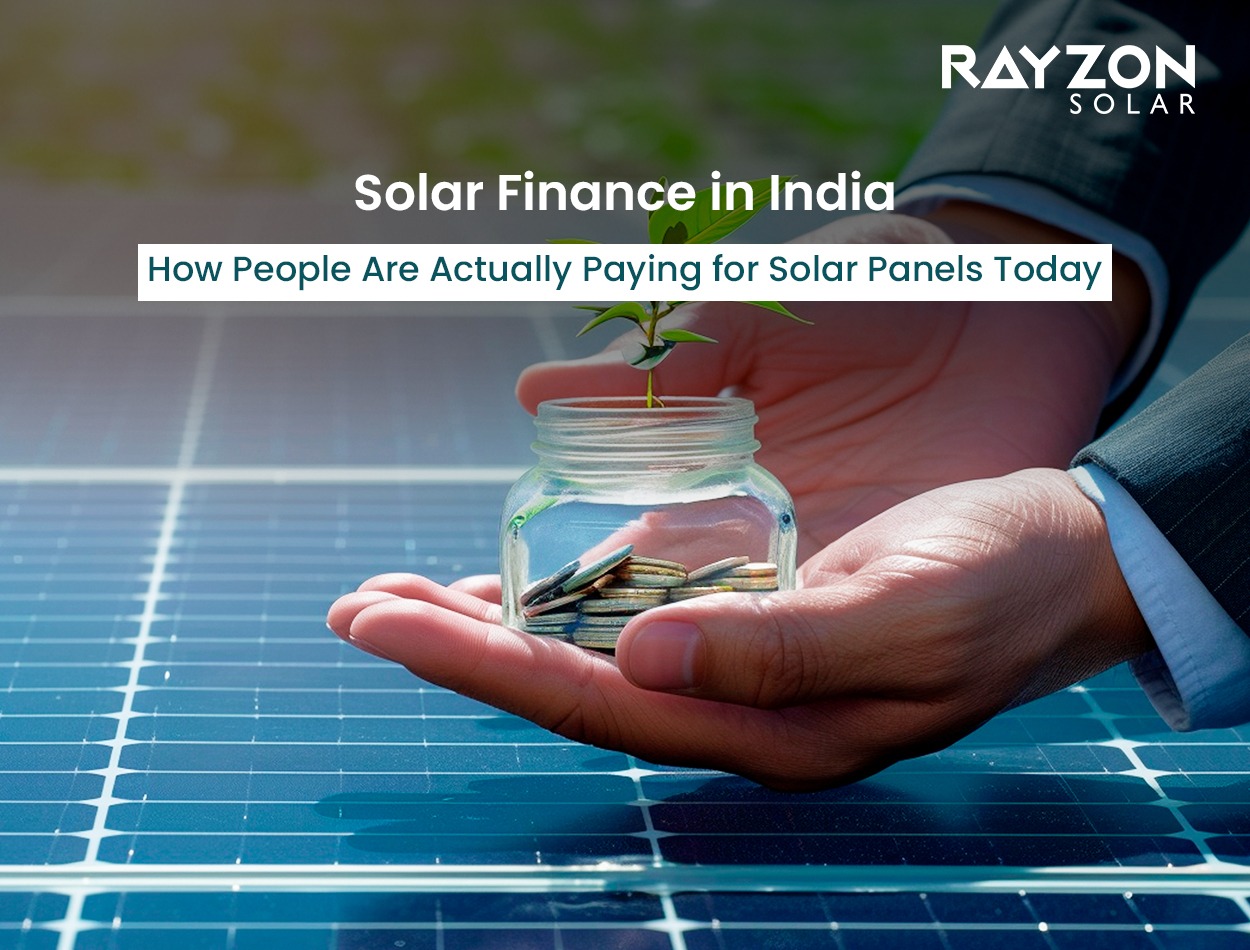
Solar Finance in India: How People Are Actually Paying for Solar Panels Today
When people talk about solar energy, the conversation usually starts with excitement and ends with hesitation. Clean power sounds great. Lower electricity bills sound even better. But then comes the pause — the cost.
Most people don’t say it out loud, but they think: solar panels must be expensive.
That single thought delays decisions for months, sometimes years.
The truth is, solar in India has quietly become much more affordable and attractive investment than it used to be. Not only because panels became cheaper over the period, but also because the way people pay for solar has changed completely.
Today, very few people pay for solar the way they once did — by writing one big cheque.
Why Solar Feels Expensive at First Glance
Solar is a long-term investment in system, but we often judge it like a short-term purchase. When someone hears the total system cost, they compare it with other home expenses or buying of white goods and feel unsure. What gets missed in that moment is an important detail: solar replaces something you have been paying and would continue to pay for every month.
Electricity bills don’t stop. They increase slowly, quietly, year after year. Solar doesn’t remove electricity usage — it replaces the source.
Once you see solar as a monthly decision instead of a one-time expense, the numbers start making sense.
The Role of Government Subsidy
For residential rooftop solar, the Indian government provides subsidies under MNRE guidelines, and some states even top them up with their own additional subsidy. This support exists to encourage more households to move towards clean energy.
In simple terms, a subsidy reduces the amount you must pay from your pocket upfront. It is not a loan and it does not need to be repaid. For many families, this reduction alone is enough to make solar feel achievable.
Subsidy structures and eligibility depend on system size, location, and prevailing government policies, so it’s always important to check the latest norms before planning.
Solar Loans: Stretching the Cost Comfortably
For those who don’t want to invest a large amount upfront, solar loans have become a practical option. These work much like other familiar loans — you pay a fixed amount every month instead of paying everything at once.
What makes solar loans different from most other loans is the return. From the very first month, your electricity bill begins to reduce. So while you’re paying an EMI, you’re also saving money at the same time by eliminating to pay your electricity bills.
Many homeowners and small businesses discover that the monthly savings on power bills help balance out a large part of the loan payment.
EMI-Based Solar: The Shift That Changed Everything
EMI options have played a major role in increasing solar adoption across India. Instead of asking whether they can afford the system, people now ask whether they are comfortable with the monthly payment.
In many cases, the EMI is close to what the household or business was already spending on electricity. The difference is that the EMI ends after a few years — making a household full owner of the system and they enjoy free electricity few many years ahead.
This is why solar is no longer limited to large factories or premium homes. It is becoming a normal decision for middle-income families, shops, offices, schools, and small industries.
Understanding Savings Without Complicated Calculations
You don’t need complex formulas to understand solar savings. A simple way to look at it is this: if your monthly electricity bill reduces significantly and the EMI fits within that difference, solar starts working in your favour immediately.
After the payment period ends, the system continues producing power for years, often decades. At that stage, the savings feel very real — not theoretical.
What to Keep in Mind Before Choosing a Finance Option
Before finalising any solar finance plan, it’s important to understand what suits your comfort level. Some people prefer finishing payments early, others prefer lighter monthly commitments. There is no single right way.
A trustworthy solar partner will explain financing clearly, without rushing decisions or hiding conditions in fine print.
Closing Thought
Solar energy in India is no longer about having extra money. It’s about planning better.
With subsidies, loans, and EMI options available today, solar has become accessible to people who once believed it was out of reach. If you already plan for electricity expenses every month, you are already planning for solar — whether you realise it or not.
The sunlight doesn’t send a bill. Once the system is paid for, it simply keeps working.