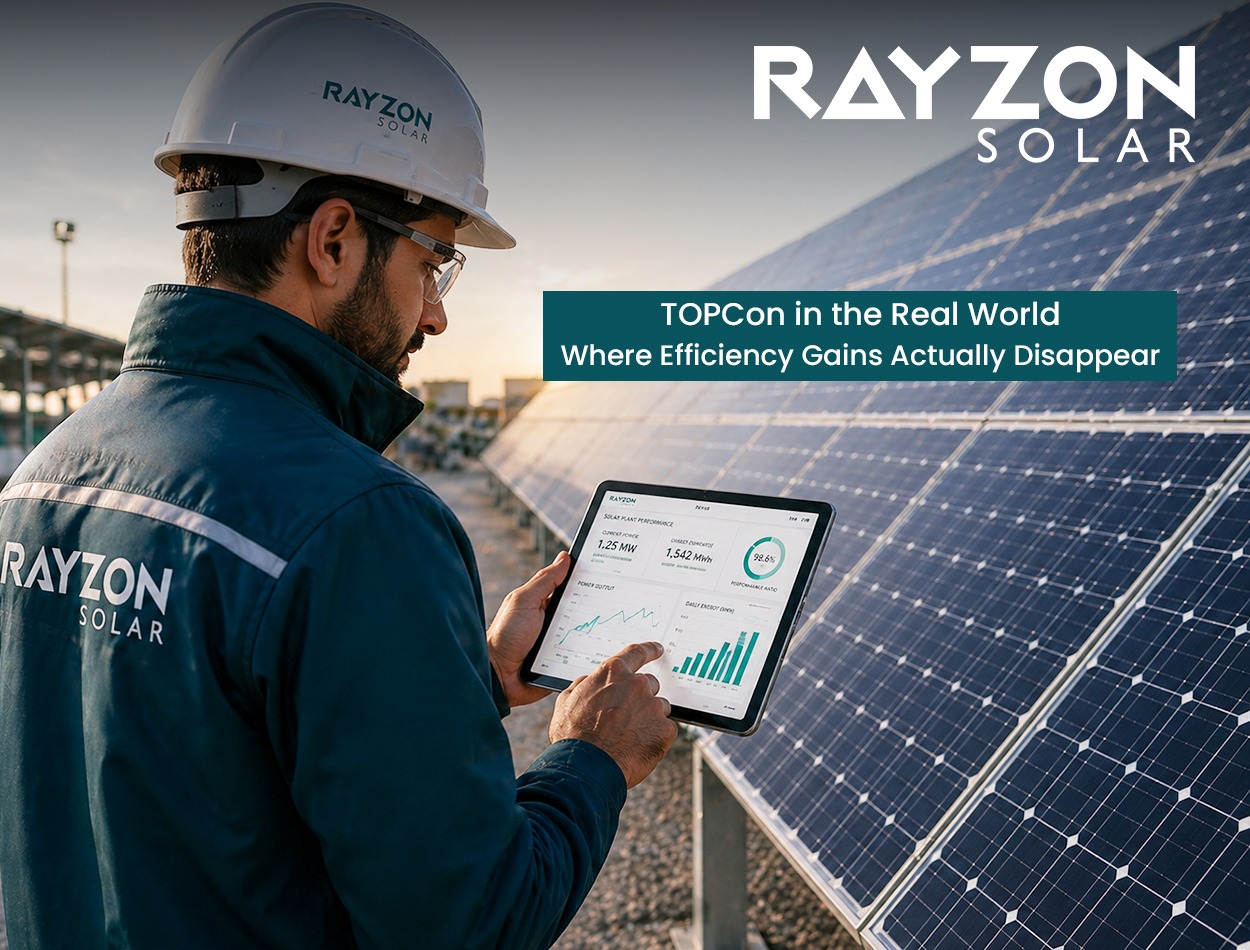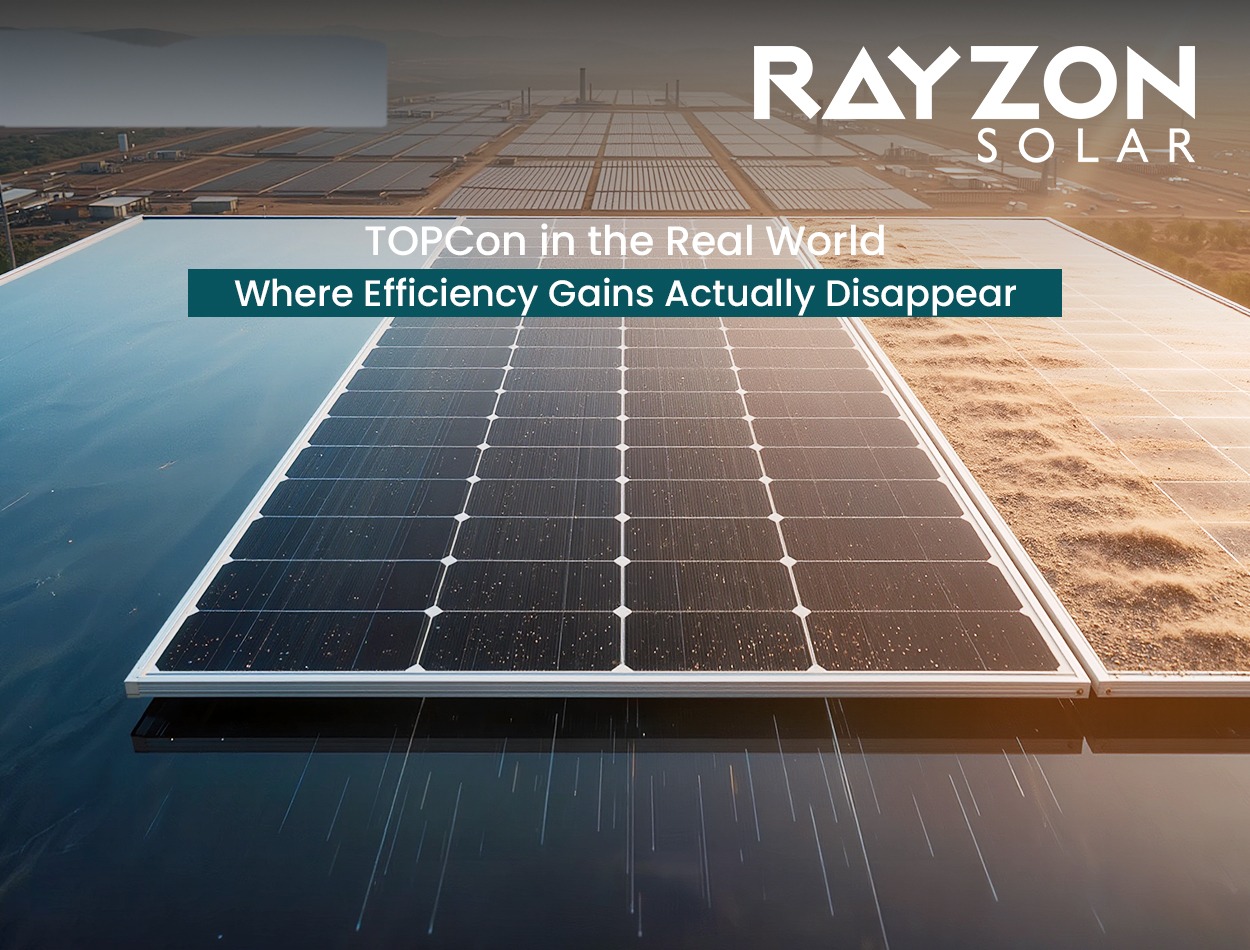
TOPCon in the Real World: Where Efficiency Gains Actually Disappear
Lab efficiency numbers often look impressive. But real-world output tells a different story. This is the gap where many solar buyers get confused.
TOPCon modules are known for higher efficiency. In controlled lab conditions, they perform better than traditional technologies. But solar plants do not operate in labs. They face heat, dust, and uneven conditions every day.
Temperature is the first major factor. As module temperature rises, efficiency drops. In hot regions, this loss can be significant. Even high-efficiency modules cannot escape this physics. A panel rated at peak efficiency may lose a noticeable portion of its output during midday heat.
Soiling is another silent factor. Dust, pollution, and bird droppings block sunlight. This reduces the energy reaching the cells. Over time, even a thin layer can cut performance. Cleaning cycles and local environment play a big role here.
Mismatch losses also matter. Not all modules in a plant perform identically. Slight differences in manufacturing, shading, or aging create imbalance. The weakest module can drag down the performance of the entire string.
Then comes BOS, or Balance of System. This includes inverters, wiring, and other components. Even if modules are highly efficient, system-level losses reduce overall gains. Energy conversion and transmission are never 100% perfect.
So, the real value of TOPCon is not just in peak efficiency. It lies in how well it holds performance under stress. Understanding these losses helps in better system design and realistic expectations.
Rayzon Solar focuses on building modules suited for real conditions. The goal is not just higher numbers on paper, but stable performance where it truly matters.