The Science Behind TOPCon Solar Panels: How Tunnel Oxide Improves Efficiency
Solar technology keeps improving every year. One of the most advanced innovations in modern solar panels is TOPCon technology, which stands for Tunnel Oxide Passivated Contact. Presently, this technology dominates the share amongst panels produced worldwide as this helps in improving efficiency as well as yields as compared to erstwhile PERC panels.
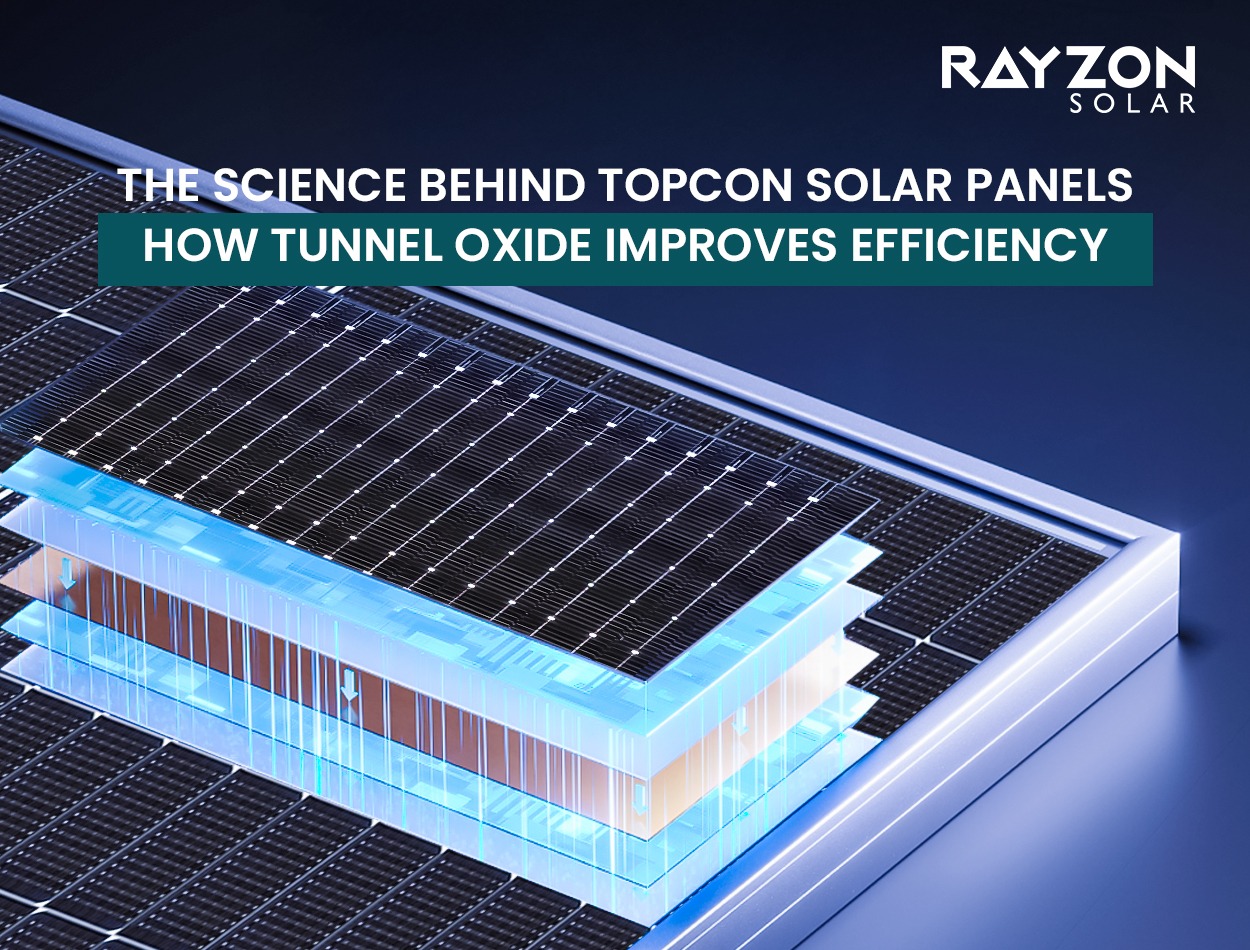
The TOPCon solar cell structure takes the base structure of PERT solar cells but includes an ultra-thin silicon dioxide (SiO2) layer working as the tunnel oxide layer and replaces the back surface field layer with a phosphorus-doped polycrystalline silicon layer. These modifications improve the efficiency by reducing the recombination process thanks to the passivation in the added layers. On the manufacturing side, a few additional steps are required beyond PERC cell manufacturing, like plasma-enhanced chemical vapour deposition (PECVD) process followed by annealing at 900 Deg. C to transform the layer into an n+ Poly Si layer, and finally applying Ag/Al contacts using the quick firing method at a temperature of 760 Deg. C
Another important part of TOPCon is surface passivation. In simple terms, passivation protects the silicon surface so that fewer electrons recombine or disappear before producing electricity. When fewer electrons are lost, the panel converts more sunlight into usable power.
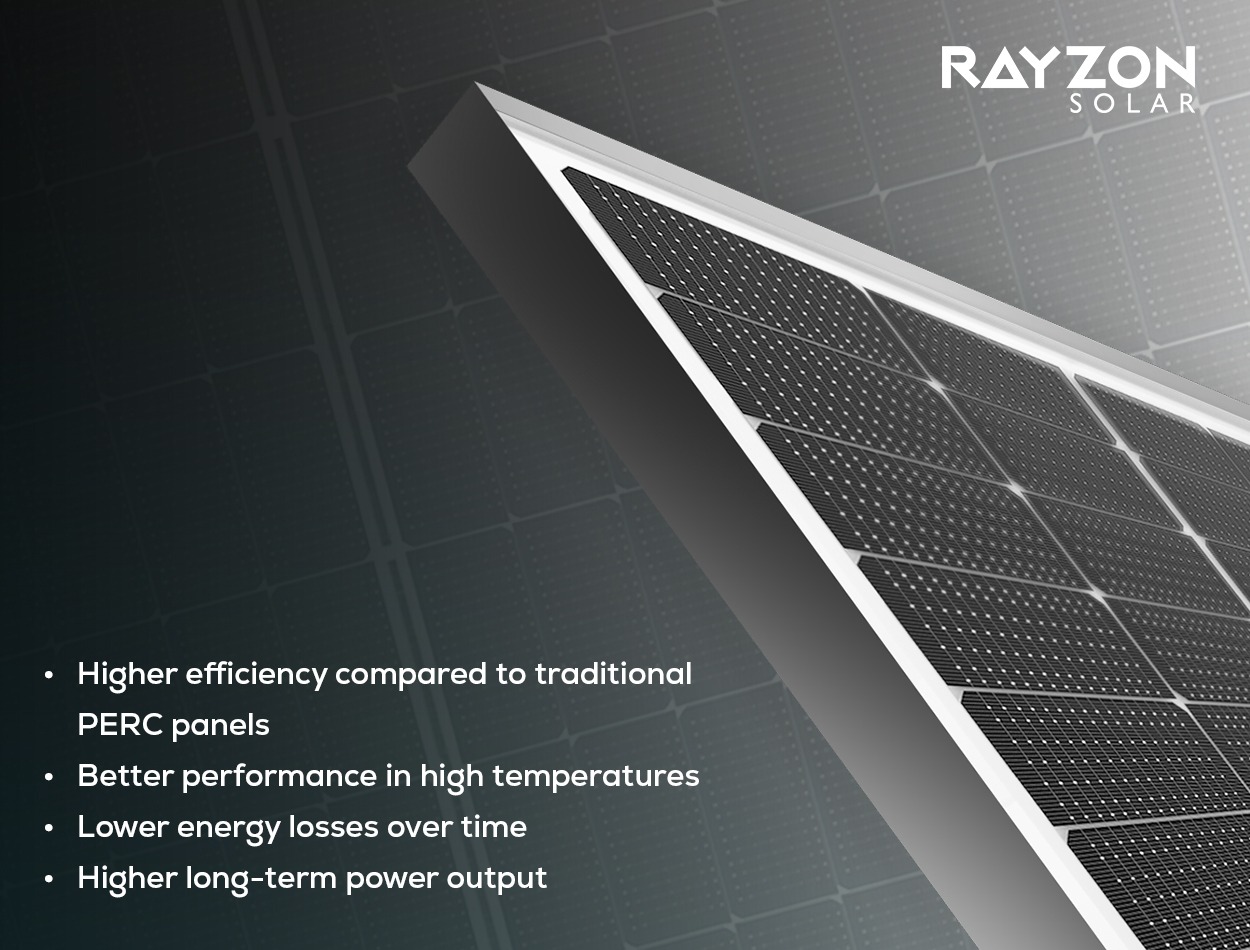
Because of these improvements, TOPCon solar panels offer several advantages:
- Higher efficiency compared to traditional PERC panels
- Better performance in high temperatures
- Lower energy losses over time
- Higher long-term power output
For homeowners, businesses, and solar developers, this means more electricity from the same rooftop or land area.
As solar energy demand grows, technologies like TOPCon help improve reliability and performance. Manufacturers like Rayzon Solar continue to adopt advanced cell technologies to deliver high-efficiency solar panels that support the global transition to clean energy.
Simply put, TOPCon technology helps solar panels generate more power, more efficiently, and for a longer time.