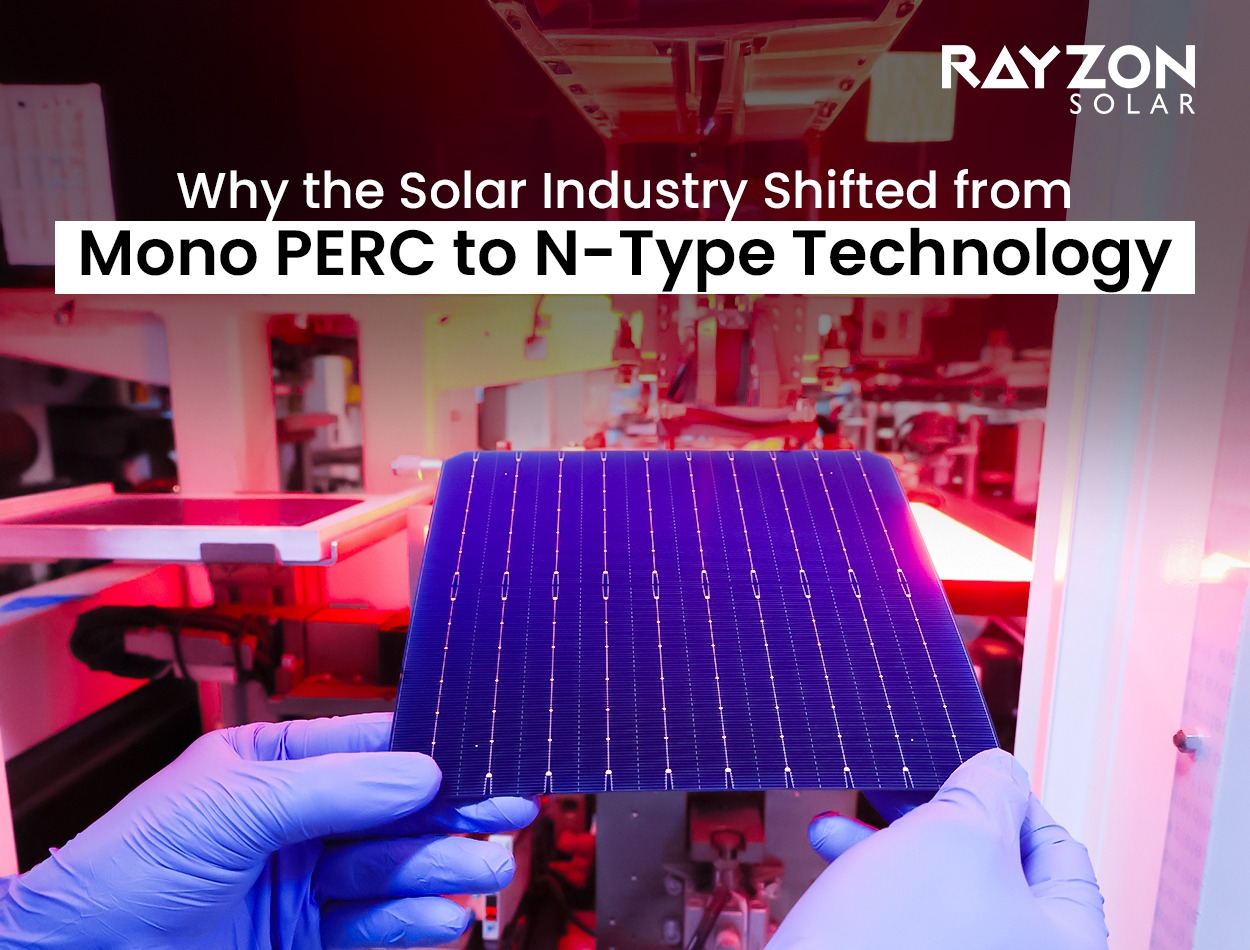
Why the Solar Industry Shifted from Mono PERC to N-Type Technology
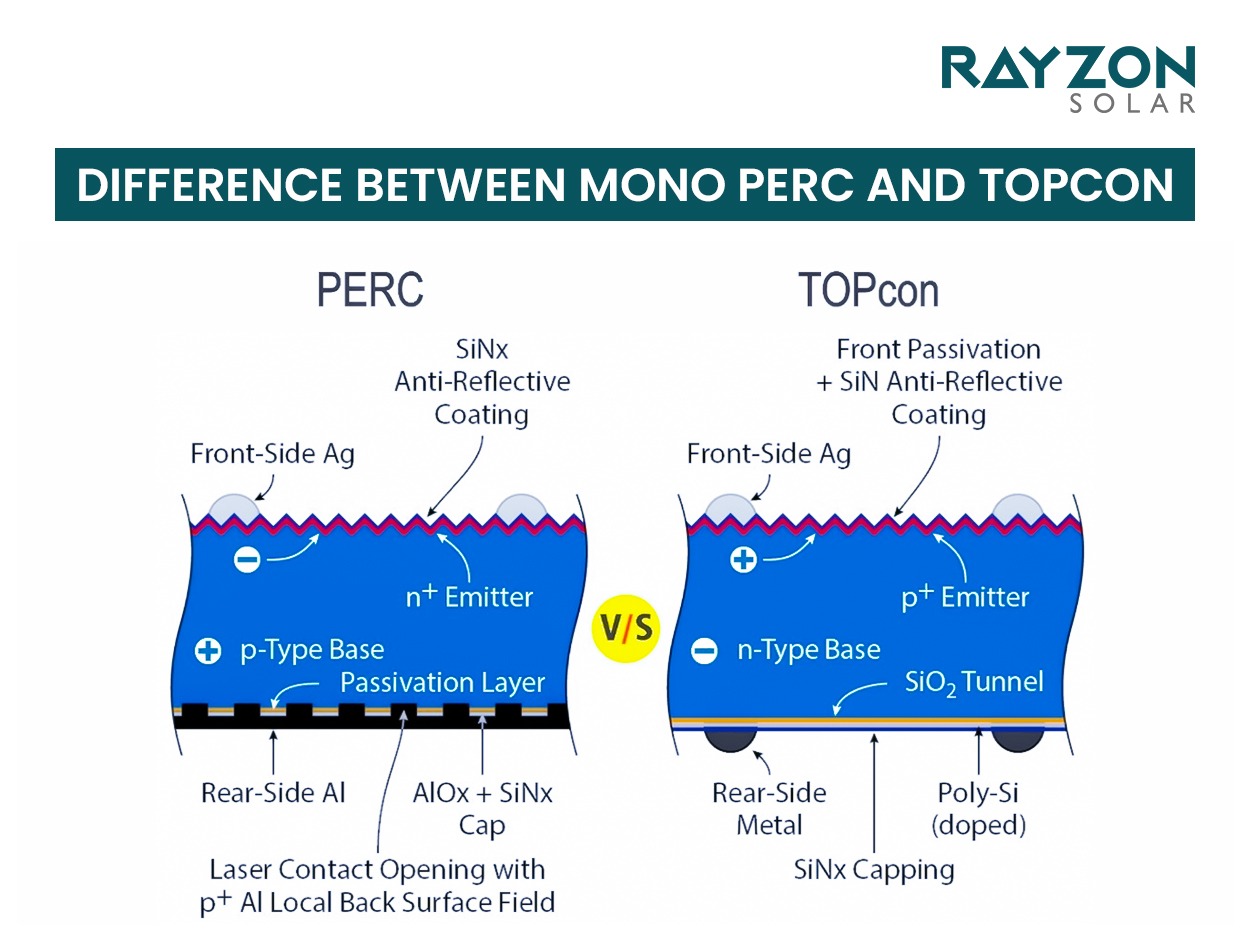
For nearly half a decade, Mono PERC (Passivated Emitter and Rear Cell) technology dominated the solar industry because it significantly improved efficiency compared to older aluminum back surface field cells. By adding a passivation layer on the rear side of the cell, PERC cells reflect unused light back into the silicon wafer, allowing them to generate more electricity from the same sunlight.
However, as global solar demand increased and installations expanded into harsher climates, certain technical limitations of PERC became more visible.
One major challenge is light-induced degradation (LID). When PERC cells are exposed to sunlight for the first time, interactions between boron and oxygen in the silicon wafer can reduce the cell’s efficiency. Over time, another phenomenon in the industry, light- and elevated-temperature-induced degradation (LeTID), has come to light and can further reduce performance, particularly in hot environments where modules operate at higher temperatures.
These degradation mechanisms do not destroy the module, but they gradually reduce the amount of electricity a solar panel can produce over its lifetime. In the quest for performance, higher-yield researchers continued their work on alternatives that can help overcome current technology limitations.
This is where N-Type solar technology gained attention. Unlike PERC cells, which use boron-doped silicon wafers, N-Type cells are made using phosphorus-doped wafers. This material structure is not susceptible to boron-oxygen-related LID, making the cells more stable under sunlight.
The result is improved long-term energy yield, lower degradation rates, and better performance in high-temperature environments. Because of these advantages, many next-generation solar technologies, such as TOPCon and back-contact cells, are now built on N-Type wafers.
The industry’s transition from PERC to N-Type is not simply a trend. It reflects the solar sector’s focus on improving reliability, lifetime energy generation, and the overall efficiency of photovoltaic systems.