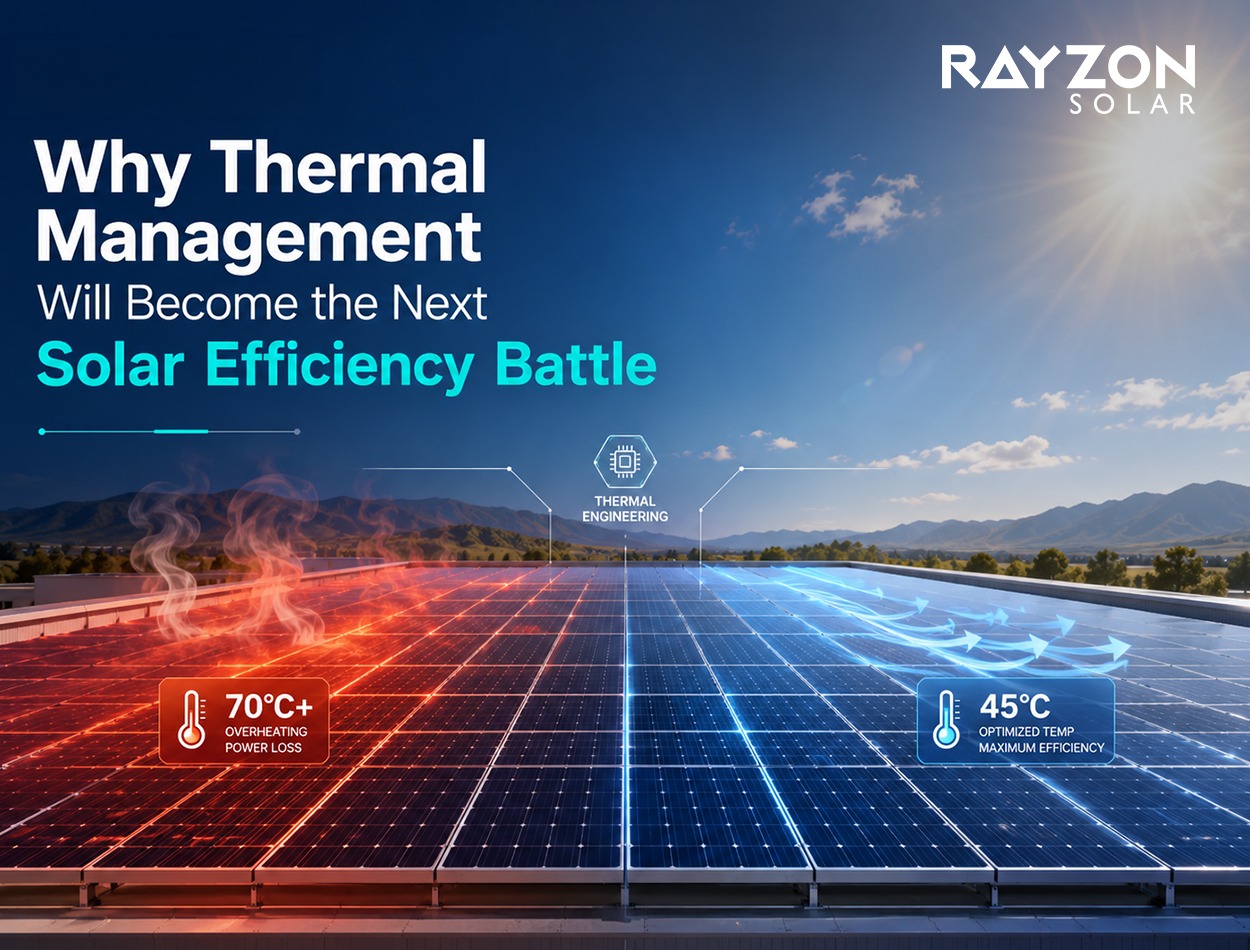
Why Thermal Management Will Become the Next Solar Efficiency Battle
Solar technology continues to push efficiency higher. However, one challenge now demands greater attention: thermal management. As solar modules become more powerful, controlling the amount of heat generated while converting light to electricity will play a critical role in sustaining long-term performance. Also, climate change is real, and we see elevated temperatures across multiple countries that haven’t seen such heat waves in centuries.
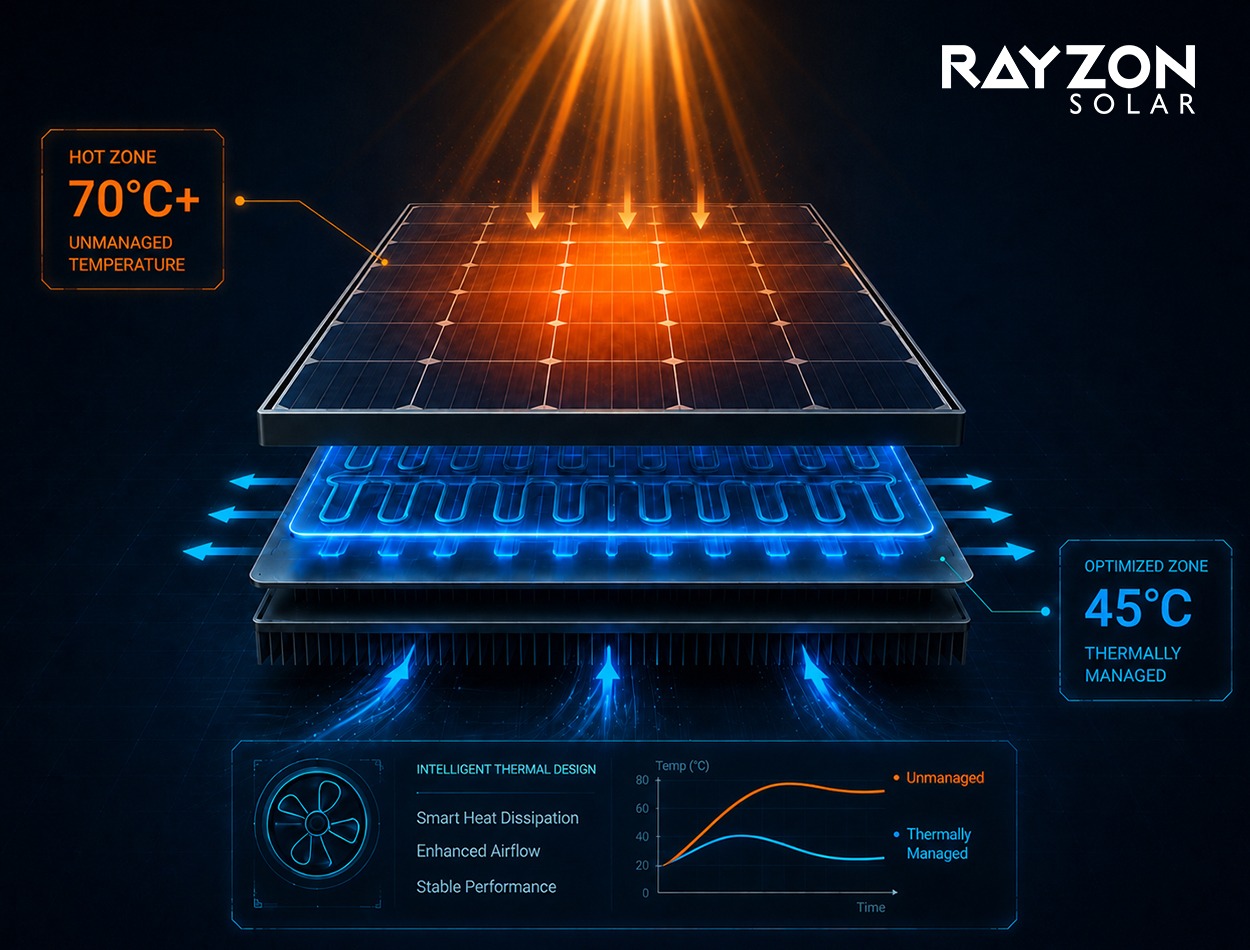
Solar panels perform best at around 25°C (77°F) under Standard Test Conditions (STC). However, in real-world environments, module temperatures often exceed 60–70°C, especially in hot climates. Research shows that most crystalline silicon modules lose approximately 0.3% to 0.5% of their power output for every 1°C rise above 25°C at the cell level. This makes heat a direct factor in energy generation.
Higher temperatures also accelerate material degradation. Continuous heat exposure can increase cell stress, reduce module lifespan, and contribute to issues such as encapsulant discolouration and solder joint fatigue. Effective thermal management helps maintain both efficiency and reliability over decades.
Traditional heat dissipation relies on passive cooling through module materials, frame design, and natural airflow. While these methods remain effective, they have physical limits as module power density continues to increase. The industry now needs smarter thermal solutions.
Manufacturers and researchers are exploring several innovations, like advanced encapsulation materials that can improve heat transfer. High-conductivity back sheets which can help distribute heat more evenly. Optimized module designs enhance airflow, while emerging technologies such as radiative cooling coatings and phase-change materials show promising results in reducing operating temperatures without external power.
Thermal management will also become more important as next-generation cell technologies, including TOPCon, HJT, and tandem solar cells, achieve higher efficiencies. These technologies deliver greater power output but also require tighter temperature control to preserve performance under demanding conditions.
The future of solar efficiency will depend on more than advanced cell architecture. It will require intelligent thermal design that minimises energy losses, protects module integrity, and maximizes lifetime energy yield.
At Rayzon Solar, innovation goes beyond improving cell efficiency. Building modules with optimized thermal performance will help deliver consistent energy generation, higher reliability, and greater long-term value for customers worldwide.