More Blogs for You

Hybrid Solar System: The Complete Guide for Indian Buyers
If you have grown up in an Indian city or town, you already know the drill. The lights flicker, the inverter beeps, and somewhere a DISCOM official is probably shrugging about "load shedding." Add to that an electricity bill that seems to climb every quarter, and it is no surprise that rooftop solar has become a dinner-table topic in almost every Indian household. A hybrid solar system is a setup that combines solar panels, a battery, and your regular grid connection so that power keeps flowing whether the sun is out or the grid has failed you. In one line, a hybrid solar system is what you get when solar generation, battery backup, and grid electricity work together instead of separately.
Read More..
Understanding Solar Panel Technology: A Comprehensive Guide for United States Consumers
Solar energy has seen a sharp increase in popularity in recent years as more people and companies look for environmentally friendly ways to power their operations. Solar panels are an essential part of this green revolution because they capture solar radiation and turn it into electrical power. However, understanding the science behind solar panels can be difficult for a lot of people. There's so much to learn about solar cells and efficiency ratings, for example. We will break down the principles of solar panel technology so that United States customers can take wise choices about adopting solar energy in their homes or places of business.
Read More..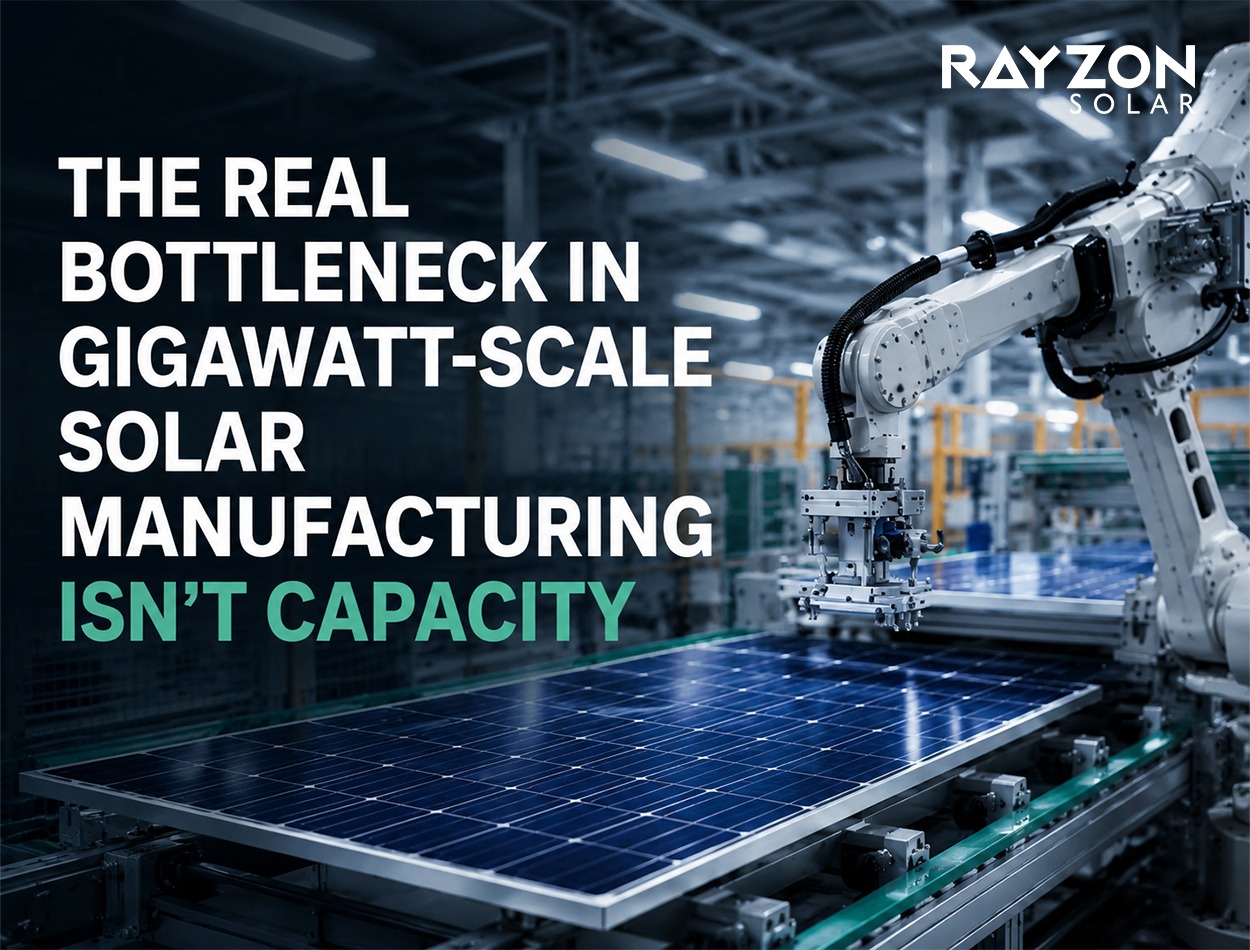
The Real Bottleneck in Gigawatt-Scale Solar Manufacturing Isn’t Capacity
The solar industry often celebrates gigawatt-scale manufacturing capacity. Yet capacity alone does not guarantee high-quality output. The real differentiator lies in manufacturing excellence. The International Energy Agency (IEA) highlights that global solar PV manufacturing capacity is already sufficient to meet projected demand for 2030. The adverse impact of this is already seen with many facilities operating much below their optimal capacity. This shows that consistent production matters more than nameplate installed capacity alone.
Read More..