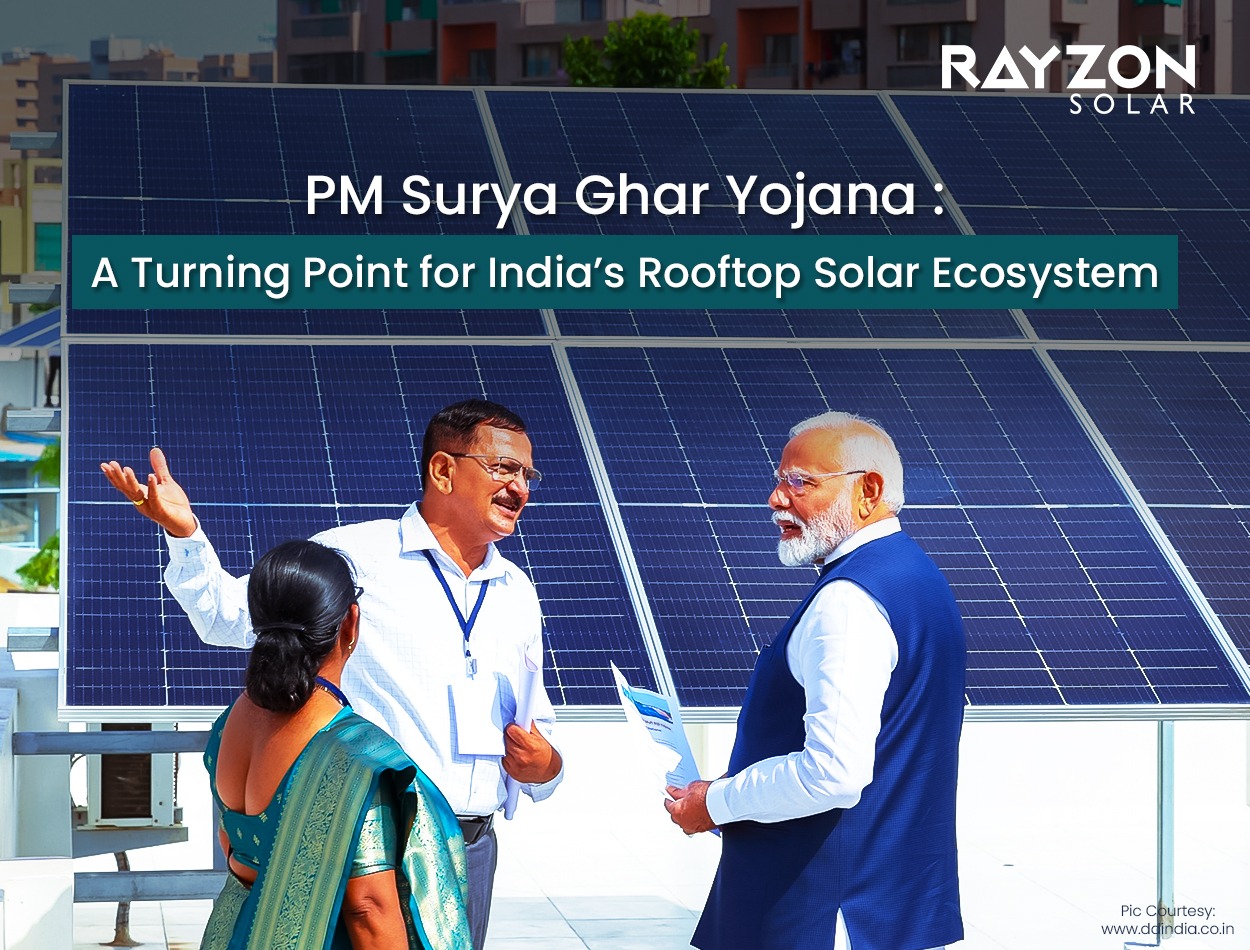
PM Surya Ghar Yojana: A Turning Point for India’s Rooftop Solar Ecosystem
India’s renewable energy journey has entered a decisive phase. With the launch of PM Surya Ghar: Muft Bijli Yojana, the government has sent a clear signal—solar power is no longer optional; it is foundational to India’s energy future.
While the scheme is widely discussed for its residential benefits, its deeper impact lies in how it reshapes the entire solar value chain. From manufacturing to System Integrators, from financiers to distribution partners, PM Surya Ghar Yojana creates a ripple effect that directly strengthens India’s B2B solar ecosystem.
For companies operating in solar manufacturing and large-scale supply, this scheme is not just a policy announcement—it is a structural shift.
Understanding PM Surya Ghar Yojana Beyond the Headlines
At its core, PM Surya Ghar Yojana aims to enable 1 crore households to adopt rooftop solar systems by providing subsidies of up to ₹78,000. The objective goes beyond free electricity—it focuses on energy independence, reduced power bills, and decentralized power generation.
However, rooftop solar at this scale cannot function on fragmented execution. It demands:
- Consistent high-quality supply of module
- High manufacturing standards
- Reliable Installation networks
- Long-term performance assurance
This is where the role of B2B solar manufacturers becomes critical.
Why the Scheme Matters to the B2B Solar Industry
PM Surya Ghar Yojana significantly increases demand predictability. Unlike sporadic rooftop adoption in the past, this initiative creates a structured, policy-backed demand pipeline.
For B2B-focused solar companies, this means:
- Stable demand forecasting for modules
- Improved capacity utilization at manufacturing plants
- Long-term partnerships with EPCs and system integrators
- Greater emphasis on quality and compliance, not just pricing
As residential rooftop installations scale, Installers rely heavily on manufacturers who can deliver volume, consistency, and reliability—not just products.
Manufacturing Quality Becomes Non-Negotiable
With government-backed schemes, quality scrutiny increases automatically. Performance benchmarks, warranty commitments, and compliance standards become decisive factors.
In this environment, solar manufacturers play a dual role:
- Technology enablers delivering high-efficiency modules
- Trust partners ensuring long-term system performance
Inferior modules may reduce upfront costs, but they risk system failures, dissatisfied consumers, and reputational damage across the ecosystem. PM Surya Ghar Yojana indirectly raises the bar for manufacturers—pushing the industry toward higher efficiency, better durability, and proven reliability.
Strengthening the Installers – Manufacturer Relationship
One of the most overlooked impacts of PM Surya Ghar Yojana is the transformation of dynamics for Installers.
As installations scale rapidly:
- They need just-in-time deliveries
- Supply chain delays directly impact project timelines
- After-sales support becomes as important as module efficiency
This makes manufacturer–Installers collaboration central to success. B2B solar companies that invest in logistics readiness, technical support, and consistent supply emerge as preferred partners in this new ecosystem.
Supporting India’s Domestic Manufacturing Vision
PM Surya Ghar Yojana aligns closely with India’s broader vision of Atmanirbhar Bharat. The focus is not just on deploying solar systems, but on building a self-reliant solar manufacturing base.
Domestic manufacturers benefit from:
- Reduced dependency on imports
- Stronger policy alignment
- Increased investor confidence
- Long-term industry stability
As rooftop solar adoption rises, domestic manufacturing capacity expansion becomes both viable and necessary—strengthening India’s position in the global solar landscape.
Long-Term Impact on the Power Sector
Decentralized rooftop solar changes how power is generated, distributed, and consumed. Over time, PM Surya Ghar Yojana will:
- Reduce stress on central power infrastructure
- Lower transmission losses
- Improves tail end voltages at substations
- Encourage smarter grid management
- Promote energy-aware consumers
For the B2B solar industry, this evolution creates opportunities beyond modules—spanning storage, grid integration, and advanced system optimisation.
A Collaborative Future for Solar Growth
PM Surya Ghar Yojana succeeds only when policy, manufacturing, and execution move in sync. It is not a consumer-only initiative—it is an industry-wide opportunity.
Solar manufacturers, Installers, financiers, and policymakers now operate within a shared framework where collaboration defines success. Companies that focus on long-term value creation rather than short-term gains will lead this transition.
Looking Ahead
India stands at the intersection of ambition and execution. PM Surya Ghar Yojana transforms rooftop solar from a choice into a mainstream energy solution.
For B2B-focused solar companies, this moment demands responsibility as much as opportunity—responsibility to deliver quality, reliability, and scale that India’s energy future depends on.
The rooftop revolution has begun. And its foundation rests on strong manufacturing, trusted partnerships, and a shared vision for a sustainable India.