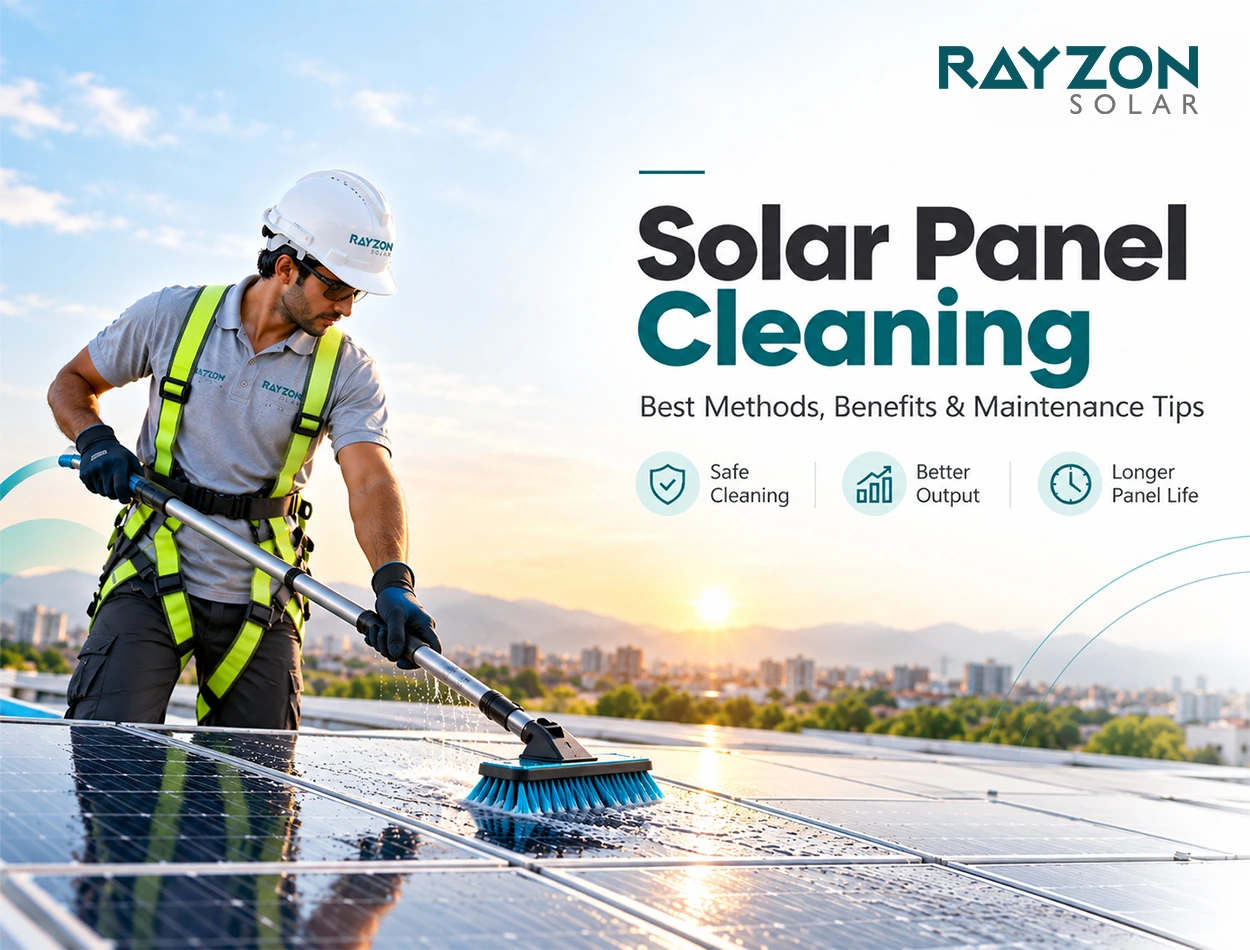
Solar Panel Cleaning: Best Methods, Benefits & Maintenance Tips
Dust, vehicle pollution, bird droppings and hard water quietly cut into solar output. Most owners only notice when the electricity bill creeps up or the inverter app shows a dip they cannot explain.
Quick answer: To clean solar panels, follow your installer’s shutdown guidance, rinse loose dust with low-pressure water, wipe gently with a soft brush or sponge, and rinse again. Clean in the early morning or evening, and avoid pressure washers, harsh chemicals and abrasive cloths.
How much you lose depends on where you live. Installer reports and field studies range from a few percent between cleanings to well over 10% in dusty industrial belts and dry summers. That gap is why a simple, regular routine matters, whether you have a home rooftop or a plant on a factory roof. If you are still choosing a system, start with a trusted solar panel manufacturer and ask what maintenance it expects over the years.
This guide covers why cleaning matters, how often to do it, what you need, the safe step-by-step method, what it costs, and when to call a professional.
Why Should You Clean Solar Panels in India?
Indian conditions are tough on glass. Several things work against your panels every day:
- Dust, vehicle pollution, construction and farm residue, pollen and leaves block sunlight before it reaches the cells.
- Bird droppings dry into stubborn patches and can cause hot spots under the glass.
- Hard water leaves mineral deposits as it dries, which build up with every wash if you are not careful.
- Dirt collects where the glass meets the frame, and over time this can encourage moss or lichen.
Cleaning also protects your investment in other ways. It supports faster payback, longer panel life and warranty compliance, since some manufacturers expect routine cleaning and some commercial insurers ask for a record of it.
Does rain clean solar panels?
Rain removes loose dust, but it can leave streaks and stains behind. It rarely removes bird droppings or sticky grime, and low-tilt or flat arrays hold dirt even after heavy showers. Rain does not replace cleaning.
Cleaning Needs in Gujarat and Maharashtra
Conditions differ across the country, so the right routine does too. In Gujarat and Maharashtra, three things tend to matter:
- Dry-season dust. From roughly October to May, dry weather, construction activity and road traffic keep dust in the air. Panels near highways, industrial estates and building sites collect it fastest.
- Industrial residue. Factory zones can add fine particles such as ash or cement dust, which stick to glass more firmly than ordinary dust.
- Post-monsoon film. After heavy rain, check your panels. Rain can leave a thin film of dried silt and mineral marks behind, and damp edges can start growing moss.
If your site is close to a plant, a quarry or a busy road, plan to clean more often than the typical urban schedule below. Watching your generation data is the most reliable way to know when.
How Often Should You Clean Solar Panels in India?
There is no single answer. Guidance in India ranges from weekly cleaning for very dusty and arid sites to every couple of months for typical rooftops, so match your routine to your surroundings.
|
Location type |
Suggested frequency |
|
Dusty or arid areas, highways, construction zones |
Every 2–4 weeks |
|
Typical urban rooftops |
Every 1–2 months |
|
Heavy monsoon regions |
Inspect after rains; clean at least quarterly |
|
Near trees, farms, poultry or bird roosts |
Check monthly; clean as needed |
Clean immediately if you see a drop in generation.
A simple habit helps: note your output on a few clear days after a clean, then compare it with later days of similar weather. A steady slide tells you it is time to clean again.
What Do You Need to Clean Solar Panels?
You do not need special equipment for a rooftop system. Keep these ready:
- Soft brush, microfiber mop or sponge
- Low-pressure hose and clean or soft water
- Mild cleaner made for PV panels (optional)
- Squeegee or soft wipe cloth
- Gloves, non-slip footwear, and a sturdy ladder or harness
If your panels are within reach from the ground, a telescopic pole with a soft brush head lets you clean without climbing. Avoid metal brushes, scouring pads and rough cloths. They scratch the glass and its anti-reflective coating.
If your water is hard, use soft or filtered water for the final rinse. This leaves fewer white marks as the glass dries.
How to Clean Solar Panels: Step-by-Step
- Choose the right time. Clean early in the morning or in the evening, when panels are cool. Hot glass makes water dry too fast, which causes streaks and soap residue.
- Check the system and the safety basics. Read your manual and follow your installer’s shutdown steps. Look over the cabling for damage first. Remember that panels can still produce voltage in daylight even when the inverter is off, so never touch exposed wiring or connectors.
- Dry-wipe the dust first. Use a soft mop or dry brush so the dust does not turn into mud when water hits it.
- Rinse gently. Use low-pressure water to lift leaves, droppings and loose dirt. Work from the top of the panel downward.
- Wipe lightly. Use a sponge or soft brush with plain water or a mild solution. Do not scrub hard. For dried bird droppings, soak the spot for a minute and lift it gently rather than scraping.
- Rinse again and remove the water. Squeegee or wipe off the leftover water to prevent stains and mineral spots.
- Let the panels dry, then check output. Switch the system back on and watch generation over the next few hours. If output is still low, look for shade, damage or a fault instead of cleaning again.
Can I clean solar panels from the ground?
Often, yes. A hose or telescopic brush from ground level works well on low arrays. Do not stretch, lean over a parapet or climb onto an unsafe roof just to reach one panel.
Solar Panel Cleaning Dos and Don’ts
|
Do |
Don’t |
|
Clean when panels are cool |
Use pressure washers, which can damage seals and wiring |
|
Use soft or clean water |
Use abrasive pads, metal brushes or harsh chemicals |
|
Inspect regularly |
Stand or lean on panels |
|
Follow the manufacturer’s guidance |
Clean hot panels |
Dish soap can leave a residue that attracts fresh dust, so plain water is the safer choice unless your installer advises otherwise.
Other common mistakes are cleaning in strong midday sun, ignoring the edges and frame where dirt collects, and spraying water on loose or damaged wiring.
Safety and When to Hire a Professional for Solar Panel Cleaning
Solar panel cleaning requires proper safety precautions, especially for rooftop installations. Before starting, check the roof's structural condition, ensure safe access, and inspect for damaged wiring. Use secure ladders only for appropriate access, with suitable fall protection for work at height. Never clean panels during rain, strong winds, or thunderstorms.
When should you hire a professional?
Professional solar panel cleaning is recommended when:
- Panels are installed on high or sloped rooftops.
- The solar installation is large or difficult to access.
- Stubborn bird droppings, dust, or mineral deposits require specialized cleaning.
- Roof angles approach 45°, creating a serious fall risk.
Solar Panel Cleaning Cost in India
Professional solar panel cleaning typically costs ₹100–₹200 per kW per visit in India, according to a June 2026 study by the Council on Energy, Environment and Water (CEEW).
For example, cleaning a 5 kW solar installation may cost approximately ₹500–₹1,000 per visit at these indicative rates.
Actual charges depend on system capacity, location, roof accessibility, cleaning frequency, and labor requirements. Additional safety equipment or specialized cleaning may increase costs.
For safe cleaning and reliable performance, choose experienced solar maintenance professionals who follow manufacturer-recommended procedures.
Does cleaning pay for itself?
Here is a simple, illustrative example, not a promise. Suppose a 10 kW rooftop produces about 40 units a day on a clear day, and your electricity is worth ₹8 a unit. If dirt cuts output by 5%, you lose about 2 units a day, which is roughly ₹16 a day or ₹480 a month. If a visit costs less than that, cleaning pays for itself within the month.
Swap in your own numbers: your system size, your tariff, and a loss figure from your own generation data. In dusty areas the maths usually favours regular cleaning. In low-dust areas, cleaning more often than monthly adds little, so do not over-clean.
Cleaning Larger Plants: Manual vs Automated
Factory roofs and ground-mounted plants face a different question: manual crews, or a robotic or automated system?
Manual cleaning is the most common method and has the lowest upfront cost, but it needs labour and water on every cycle. Automated and robotic systems cost more to install and use less water over time, which is why they suit large and ground-mounted projects better than small rooftops. For a plant manager, the real comparison is the cost of each method against the energy you would otherwise lose.
Whichever you choose, put the schedule in writing as part of your operations and maintenance contract, and track generation so you can see whether it works.
Beyond Cleaning: Basic Solar Maintenance Checklist
Cleaning is one part of keeping a system healthy. Add these to your routine:
- Monitor daily or weekly generation through your inverter or app. A sudden drop is the first warning sign.
- Look for cracks, loose mounting, corrosion, and bird nesting or rodent damage under panels.
- Trim nearby branches that shade the panels. Even partial shade cuts output.
- Check that cable ties and conduits are intact after storms.
- Book a professional inspection once a year, and keep your warranty papers safe.
For a full checklist, read our complete solar panel maintenance guide.
Choosing Panels Built for Indian Conditions
Heat, dust and monsoon humidity are part of daily life here, so durability matters as much as headline efficiency. Regular solar panel cleaning helps minimize avoidable generation losses and supports long-term solar performance.
Clean panels gently, use suitable tools and water, and prioritize safety over convenience. Combine periodic cleaning with performance monitoring and professional maintenance.
Looking for reliable solar panel solutions?
Contact Rayzon Solar to explore high-efficiency solar modules and discuss product, installation-partner, or maintenance-support requirements.
FAQs on Solar Panel Cleaning
How often should I clean solar panels in India?
Every one to two months suits most urban rooftops. Dusty areas, highways and construction zones may need cleaning every two to four weeks. Check your generation too: if output drops, clean sooner instead of waiting for your schedule.
Does rain clean solar panels?
Only partly. Rain washes off loose dust, but it can leave streaks and stains, and it rarely removes bird droppings or sticky grime. Inspect your panels after the monsoon and clean them if they look dull or marked.
Can I use a pressure washer on solar panels?
No. High pressure can damage seals, coatings and wiring. A low-pressure hose with a soft brush or sponge cleans just as well without the risk.
What is the best time of day to clean solar panels?
Early morning or evening. Cool panels stop water from drying too fast and leaving streaks or residue. Cleaning hot glass can also stress it.
Can I clean solar panels with soap or detergent?
Plain water is the safest choice. Dish soap can leave a residue that attracts dust. If you need a cleaner, use a mild one made for PV panels, or follow your installer’s advice.
How much does solar panel cleaning cost in India?
It depends on the city, system size, roof access and frequency. Per-visit, per-panel, per-kW and annual-package pricing are all common. Ask what is included and compare quotes on the same basis.
Do dirty solar panels affect the electricity bill?
Yes. Dirty panels generate less, so you draw more from the grid or export less. The size of the loss depends on your location and how long the dirt has been there.
Do I need to clean panels installed under PM Surya Ghar?
Yes, subsidy-backed systems need the same care as any other. Clean them on the same schedule and keep your installer’s maintenance guidance.
Conclusion
Clean regularly, gently and safely. Match your schedule to your surroundings, use soft water and soft tools, and keep an eye on your generation so you catch problems early. A small routine protects both your output and your panels.
Need help with installation or maintenance support? Contact Rayzon Solar and our team will guide you.