Voc, Isc, Vmp and Imp Explained: How Solar Module Electrical Ratings Work in Real Installations
When evaluating a solar module for installation, four key electrical parameters—Voc, Isc, Vmp, and Imp—define how the panel will perform on-site. For installers and B2B buyers, understanding these values is essential for accurate system design, safety, and long-term efficiency.
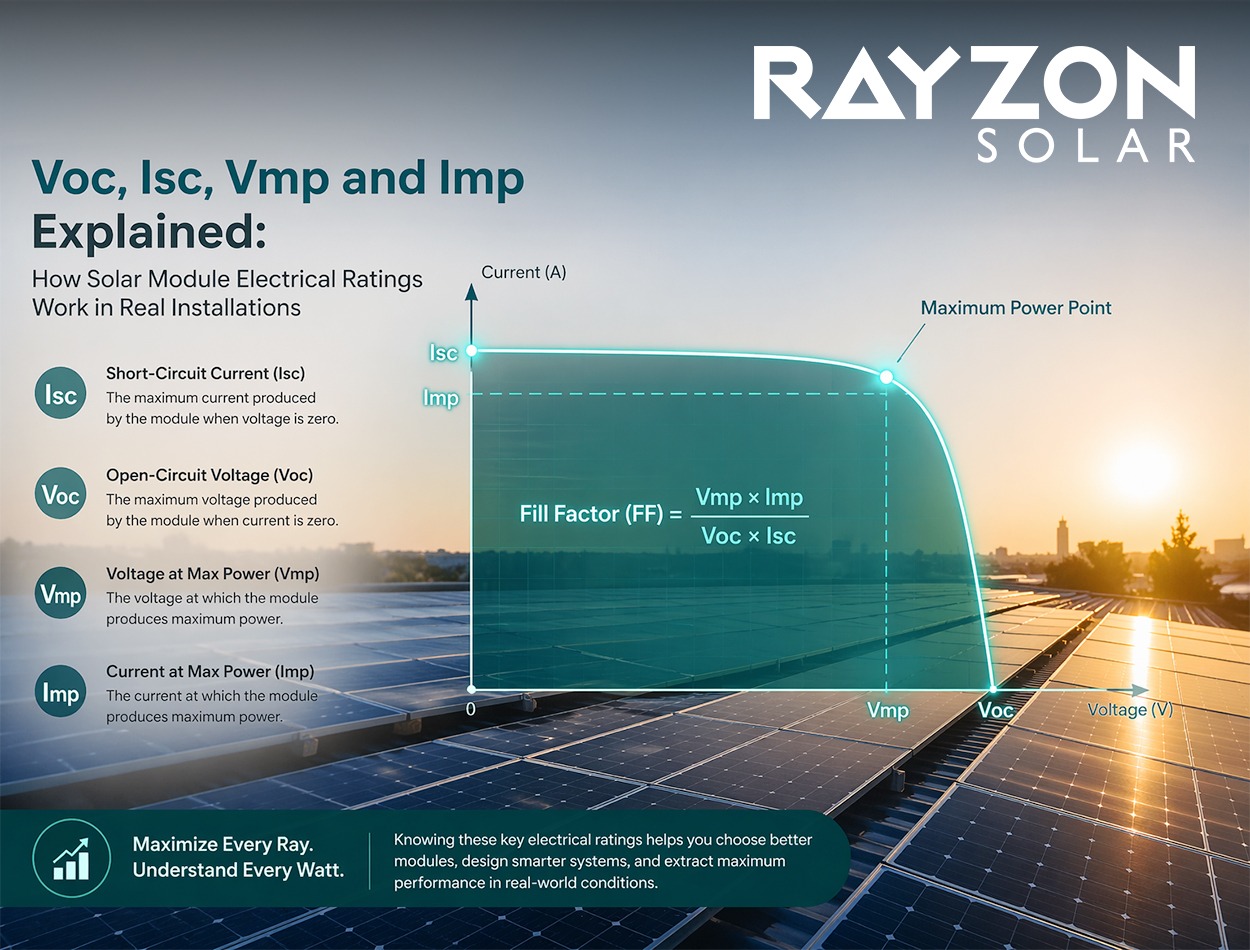
Open Circuit Voltage (Voc) is the maximum voltage a module produces when no load is connected. This value is critical during string design, as total system voltage must remain within the inverter’s allowable range. In colder climates or early mornings, Voc can increase, so it is important to consider temperature coefficients when calculating string limits.
Short Circuit Current (Isc) represents the maximum current generated when the module’s terminals are shorted. This parameter is primarily used to select appropriate cable sizes, connectors, and protection devices, such as fuses and circuit breakers. Since current increases slightly with higher sunlight, safety margins are typically applied.
Voltage at Maximum Power (Vmp) is the voltage at which the module operates when delivering its highest power output. In real installations, modules spend most of their operational time near this value, making it crucial for inverter matching and system efficiency.
Current at Maximum Power (Imp) is the current corresponding to Vmp. Together, Vmp and Imp define the module's usable power output under operating conditions.
In real-world environments, these parameters vary with temperature, irradiance, and installation factors. Proper understanding ensures optimal system sizing, reduces losses, and enhances overall reliability and performance.
In practical installations, these electrical parameters are not just datasheet values—they directly influence system safety, performance, and efficiency. A clear understanding of Voc and Isc helps design safe electrical limits, while Vmp and Imp ensure the system operates at its maximum power point. For installers and buyers alike, correctly interpreting these ratings leads to better component selection, optimised energy generation, and fewer operational risks throughout the system’s lifetime.