Understanding LID & LeTID phenomena in Solar modules
In our last blog we explained the logic and reason why solar technology moved away from Mono PERC towards N Type TOPCON especially problems related to accelerated degradation on account of operating them at elevated temperatures. In this blog we will delve deep to understand what LID and LeTID means.
What is LID?
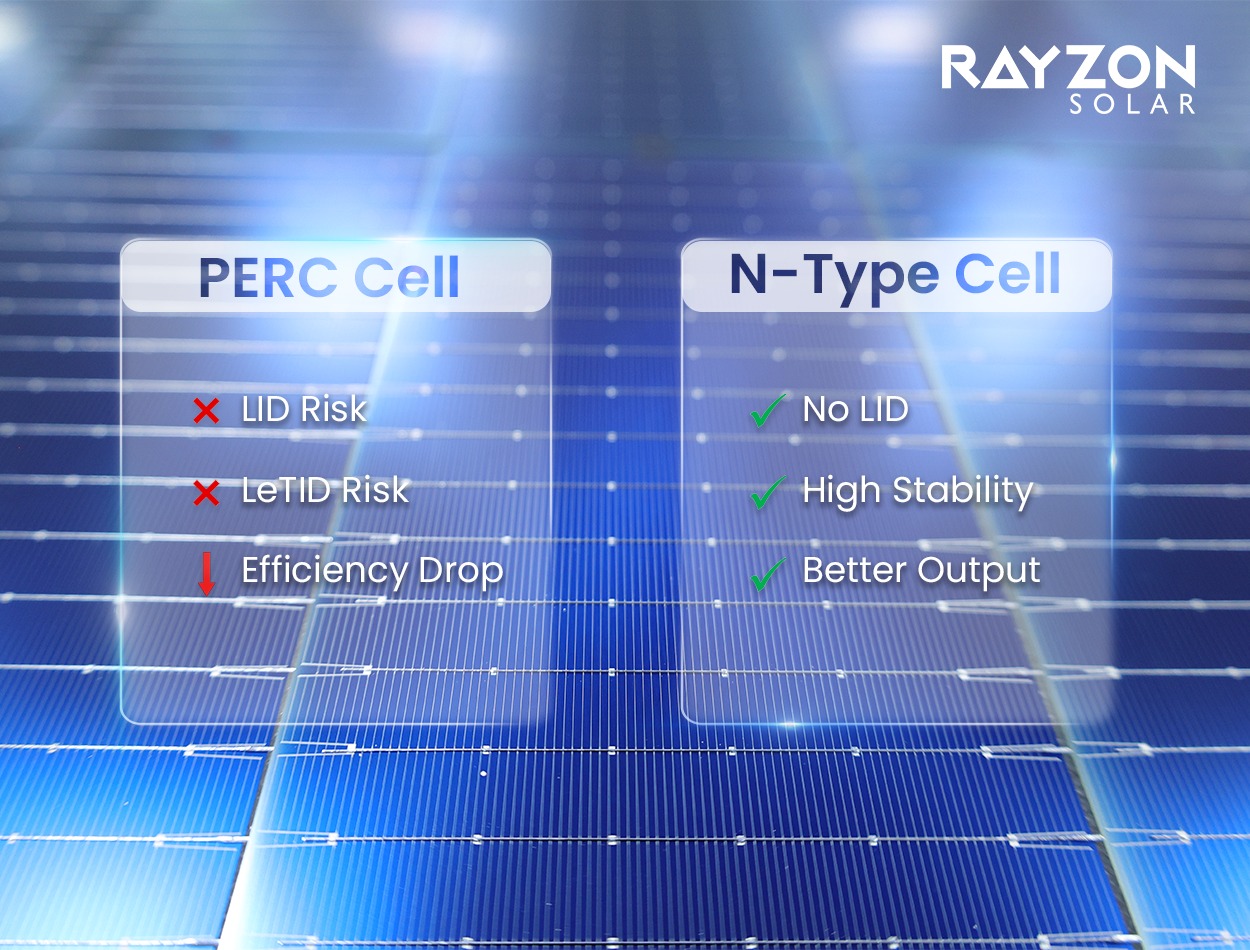
Light-induced degradation (LID) is commonly seen in all p-type of Solar cells. The cause of LID is the combination of oxygen in the silicon with the boron dopant. Such complexes capture electrons and the holes in the cell matrix rendering them permanently unavailable for energy generation. LID happens in first exposure of cells to sunlight until the power level stabilizes after a short period, the loss of power can be in the range of 1-3% and stabilization process is much quicker in hot weather conditions especially like India.
What is LeTID?
Light and Elevated Temperature Induced Degradation, has been shown to cause severe degradation in p-type silicon cells especially those using cell passivation technology like PERC. AS the name suggests LeTID is exacerbated by higher operating temperatures at higher light densities. This effect normally happens over a period, showing that development rate of LeTID in the cells is much slower than any boron/oxygen combination process. There are currently no agreed thresholds where it can be said for the occurrence of LeTID, but many of research studies have shown this phenomenon in module whose operating temperatures is above 50 Deg. C. This typically tropical countries in summer and at peak times in hot weather conditions.
Please also refer :- Why the Solar Industry Shifted from Mono PERC to N-Type Technology